Why does voltage drop matter in industrial power systems?
Why does voltage drop matter in industrial power systems?
Voltage drop is the reduction in voltage as current flows through the resistance of conductors and connections along the distribution path. When current travels from the source to a load over distance, it encounters resistance, and that resistance consumes some of the voltage. The farther the current travels and the higher the current, the greater the loss. Excessive voltage drop starves the load of the voltage it needs to operate correctly.
How resistance in conductors and connections creates voltage drop
Electrical resistance is a property of every conductor and connection. When current flows through a copper conductor, energy is dissipated as heat, appearing as a reduction in voltage along the path. Voltage drop follows Ohm's Law: voltage drop equals current times resistance (V = I × R). A 400-amp feeder through 100 feet of cable has measurable voltage drop. If source voltage is 480 volts, the load might receive 470 or 460 volts depending on cable gauge, length, and current. Each connection point - lugs, connectors, terminations - also has resistance. A loose connector, corrosion, or degraded contact pressure increase that resistance. For short feeder runs with large cables and low current, voltage drop is negligible - less than 1 percent. But for long temporary distributions, small cables, or high-current applications, voltage drop accumulates significantly. A touring company running 300 amps through 500 feet of cable may experience total voltage drop of 3, 5, or higher percent by the time power reaches the far end. Every point in that path contributes to it.
Why excessive voltage drop causes poor performance and thermal stress
Electrical equipment is designed to operate within a narrow voltage range, typically within 10 percent of nominal. A 480-volt lighting instrument is rated for 430 - 530 volts. A 208-volt motor expects 187 - 229 volts. When voltage drop consumes 5 or 10 percent by the time power reaches the load, equipment operates at the low end of its rating or below. A motor drawing 50 amps at nominal voltage may draw 60 amps at reduced voltage to produce the same output, generating additional heat that degrades insulation over time. Lighting instruments at the end of a long run with high voltage drop appear noticeably dimmer than instruments closer to the source. Heat generated at connections becomes a safety problem. A 400-amp current through a connector with slightly elevated resistance creates concentrated heat generation. Contact surfaces warm up, accelerating oxidation and increasing resistance further - a positive feedback loop. In severe cases, contact can melt nearby insulation or ignite cable jackets. Even before that extreme, elevated temperature degrades overall reliability. For rental companies managing hundreds of connections across multiple events, accumulated voltage drop and thermal stress at connections cause significant field failures.
Real-world scenarios where voltage drop determines feeder feasibility
A touring production with a 300-amp feeder service 500 feet away must calculate whether voltage drop is acceptable for the load mix. Stage lighting is voltage-insensitive and tolerates moderate drop, but motor loads and variable frequency drives require tighter limits. Solutions include increasing wire gauge, running multiple smaller feeders, reducing distance, or negotiating a closer tie-in point. A film set 1000 feet from power can deliver at 3 percent drop using large cables and moderate current. A theme park or broadcast facility must budget for voltage drop in initial design and run separate feeders or transformers to certain zones. For rental companies, voltage drop calculations are part of pre-show planning. The electrical crew measures distance from venue service to stage, estimates current demand, and specifies the feeder size needed. If existing feeder size is inadequate, larger cables or multiple distribution systems are brought in. Operating with excessive voltage drop and accepting poor equipment performance is not an option for production-critical installations.
Where KUPO Power's connectors minimize voltage drop at every connection point
KUPO Power manufactures K-LOK 400A and K-LOK 150A single-pole cam-type connectors and PowerFit 400A keyed single-pole connectors (KSPC) with contact interfaces specifically designed to minimize contact resistance and maintain low voltage drop across the mating surfaces. The cam-type contact mechanism applies consistent mechanical pressure to the mating surfaces, ensuring large contact area and low contact resistance even under thermal cycling and repeated mate / de-mate cycles. The design minimizes the resistance contribution at each connection point, which is critical in long feeder runs where multiple connections add up. While connection-level voltage drop is only a fraction of the total voltage drop in a distribution system - the bulk of the drop is in the cable itself - reducing the connection contribution through high-quality contact interfaces preserves available voltage for the load. When a touring company, rental facility, or permanent industrial installation uses K-LOK or PowerFit connectors for feeder distribution, they are ensuring that every connection point in the path maintains consistent, low-resistance contact. Combined with proper wire sizing and feeder layout planning, high-quality connectors help keep the total system voltage drop within operating limits and minimize thermal stress on every connection. The KUPO Power 101 FAQ Hub covers the full scope of feeder design and system performance.
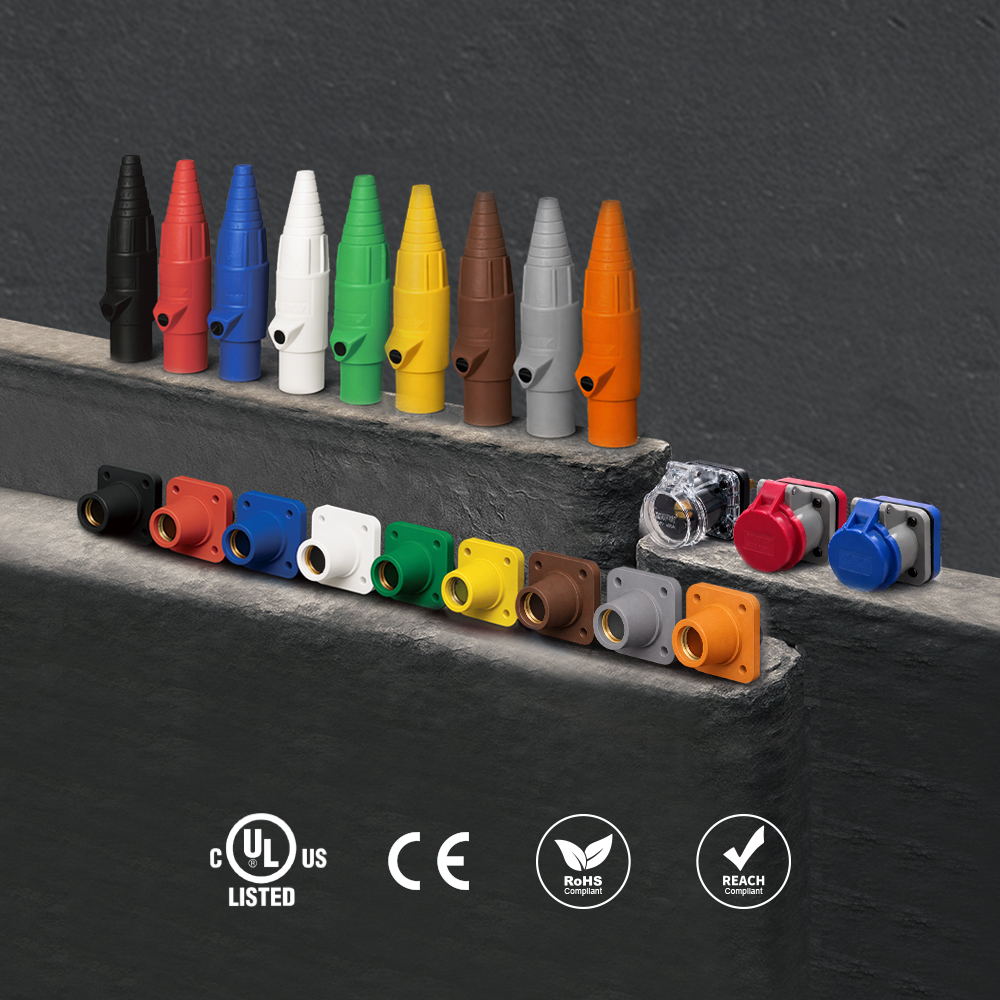 K-LOK 400A Single-Pole Cam-Type Connectors
 K-LOK 150A Single-Pole Cam-Type Connectors
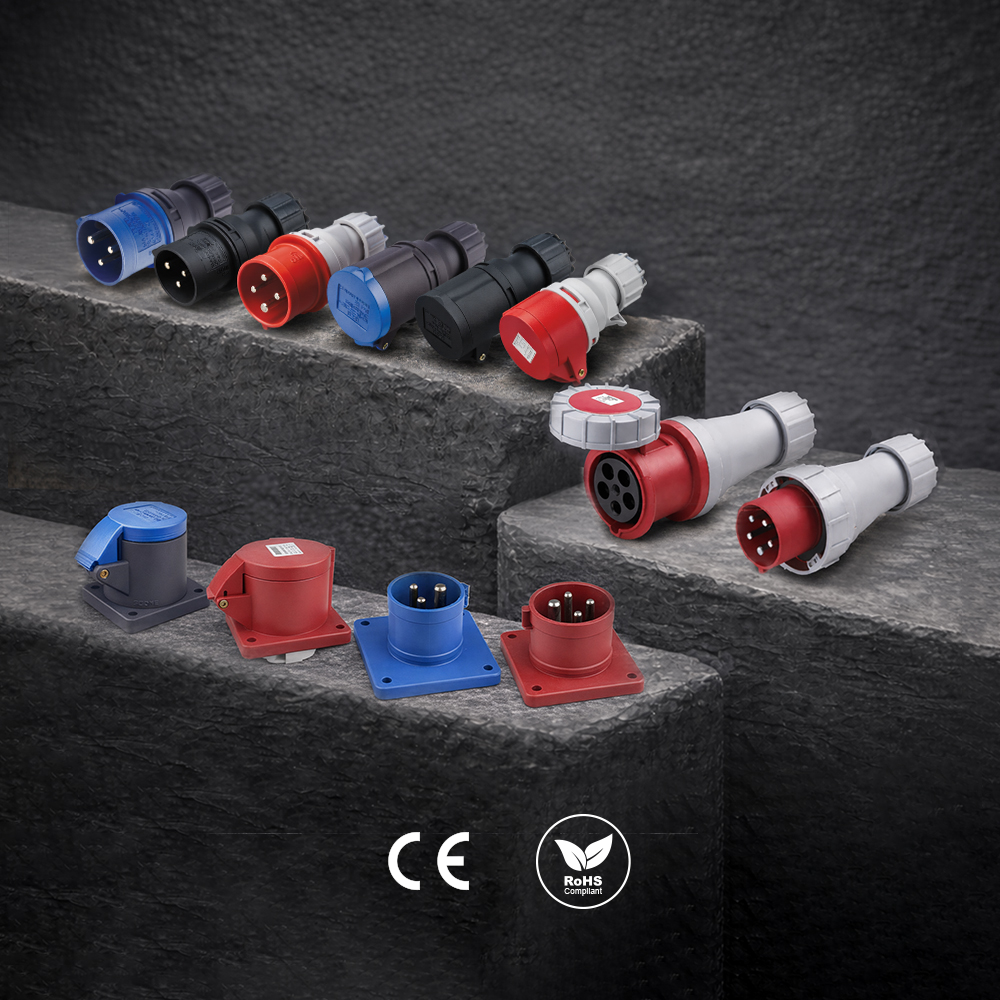 CEE Form Connectors
Have a Question?
Explore the full KUPO Power 101 FAQ Hub for answers to 30 more common questions about industrial power, or ask our team directly about your application.
