What is the difference between a feeder splitter and a distribution box?
What is the difference between a feeder splitter and a distribution box?
A feeder splitter divides one large incoming supply into a few large outgoing feeds. A distribution box goes one step further - it splits the power, protects each branch with its own breaker, and presents finished outlets ready for downstream equipment. Same family, very different jobs.
Why crews keep mixing these two up - and why it costs them on real jobs
On paper, both devices look similar: cables go in, cables come out, and the current gets divided along the way. Catalogues do not always help, since some manufacturers list the two products on the same page. The trouble is that the choice between them changes how the entire downstream system has to be designed. Pick a splitter when you needed a distribution box and the protection has to live somewhere else - usually further downstream, in places that may not be ready for it. Pick a distribution box when a splitter would have done the job and you have paid for hardware you do not actually use.
On a touring rig, this shows up as a feeder run from the company switch that lands on a piece of gear nobody is sure how to feed. On a film set, it shows up as an unprotected tap that the gaffer was not expecting. The vocabulary matters because the wrong word at the planning stage produces the wrong piece of metal on the truck.
What each device is actually designed to do, in plain electrical terms
A feeder splitter is, at its core, a passive set of busbars in an enclosure. One large feed lands on the input lugs and is mechanically split into two, three, or four large outputs of similar size. There is usually no overcurrent protection inside the splitter itself, because the assumption is that protection lives upstream (at the source) and that each downstream output will run to another protected device. Splitters exist so that one heavy feeder can be shared between two distribution boxes, two stages, or two adjacent zones of a job site without having to pull duplicate cable runs.
A distribution box does the same initial split but then keeps going. After the busbars, each branch passes through its own circuit breaker - sized for the cable and the connector that branch will feed - and lands on an output connector mounted on the face of the box. The branches are usually smaller than the input, because the whole point is to fan a single large feed out to many smaller, separately protected loads. A distribution box is ready to plug equipment into. A splitter is ready to feed something else that is ready to plug equipment into.
Put another way, a splitter is feeder-side hardware. A distribution box is load-side hardware. The line between them is whether protection and a load-rated outlet have been built in.
The question to ask before you order either piece
The decision usually comes down to one question: what is the next thing the cable will plug into? If the next thing is another protected piece of distribution gear - another distro, a dimmer rack, a stage panel - then a splitter is often the right call, because it keeps the run flexible and avoids paying for breakers you will not use. If the next thing is the actual load - a fixture, a motor, a tool, a convenience outlet - then a distribution box is the right call, because the load needs its own protection and its own rated connector.
The other thing worth checking is the rating of the input lugs against the full feeder, not the typical draw. Splitters and distribution boxes both have to survive the worst case the upstream supply can deliver, not just what the show usually pulls. A device that is fine on a quiet day can fail on the day a fault drives the feeder to its limit.
Where KUPO Power's connectors fit into both ends of this split
Whether the box on the truck is a splitter or a distribution box, the connectors on its input lugs and output panel are what hold the whole feeder-to-load chain together - and that connector layer is what KUPO Power builds. K-LOK 400A and K-LOK 150A single-pole cam-type connectors are KUPO's equivalents to the Camlok ecosystem standard in North American touring and film. PowerFit 400A is the keyed single-pole equivalent to the European Powersafe pattern. CEE Form connectors cover the IEC 60309 international pin-and-sleeve side. Because the same connector families show up on the splitter, the distro, and the cable that runs between them, choosing connectors from one ecosystem keeps an entire feeder-to-load chain compatible. For a deeper walk through how breakers, cable, and connectors have to be matched as one system, the KUPO Power 101 FAQ Hub is the fastest reference.
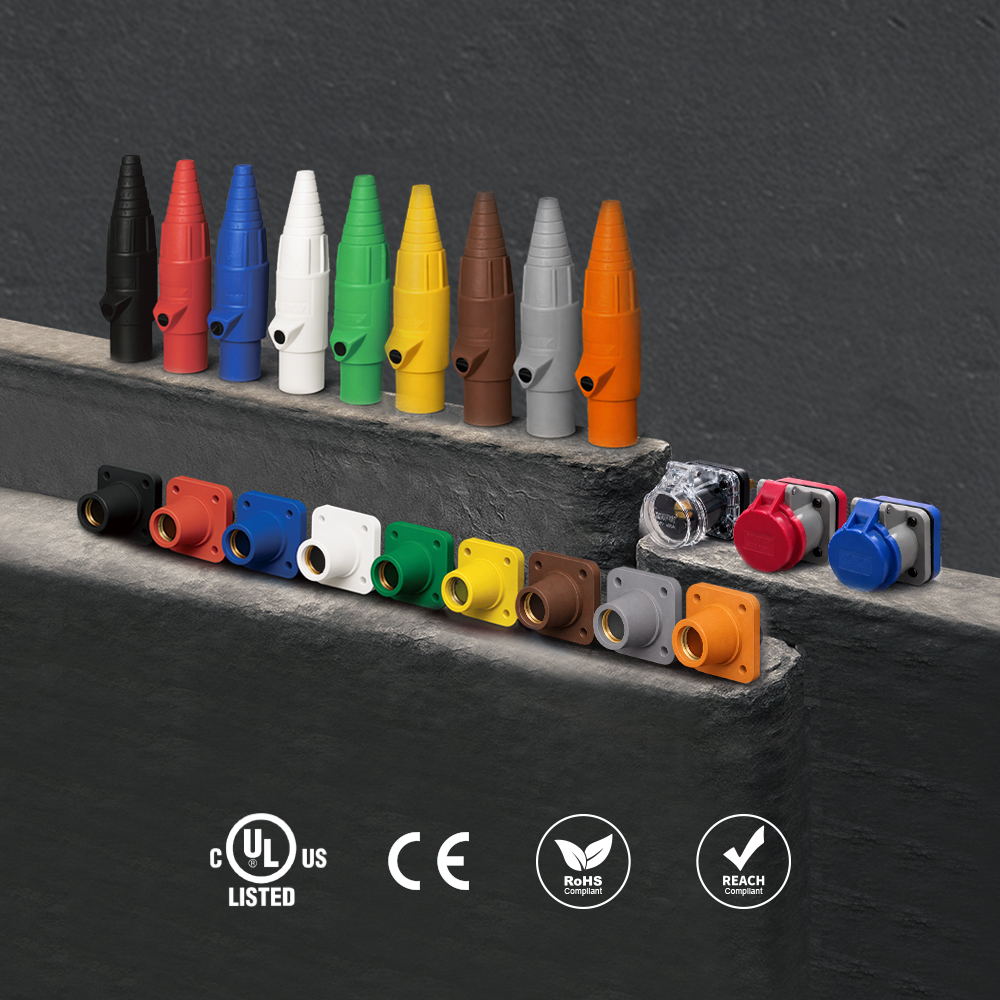 K-LOK 400A Single-Pole Cam-Type Connectors
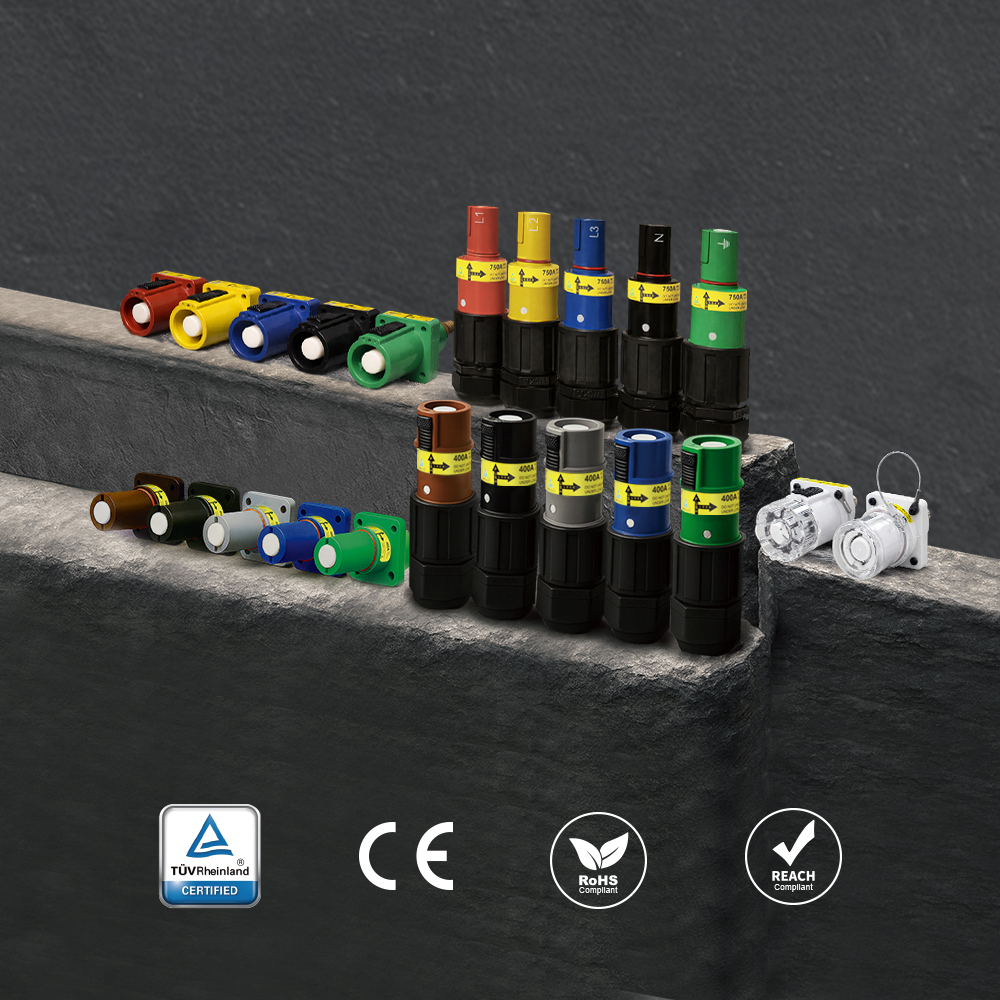 PowerFit 400A Keyed Single-Pole Connectors
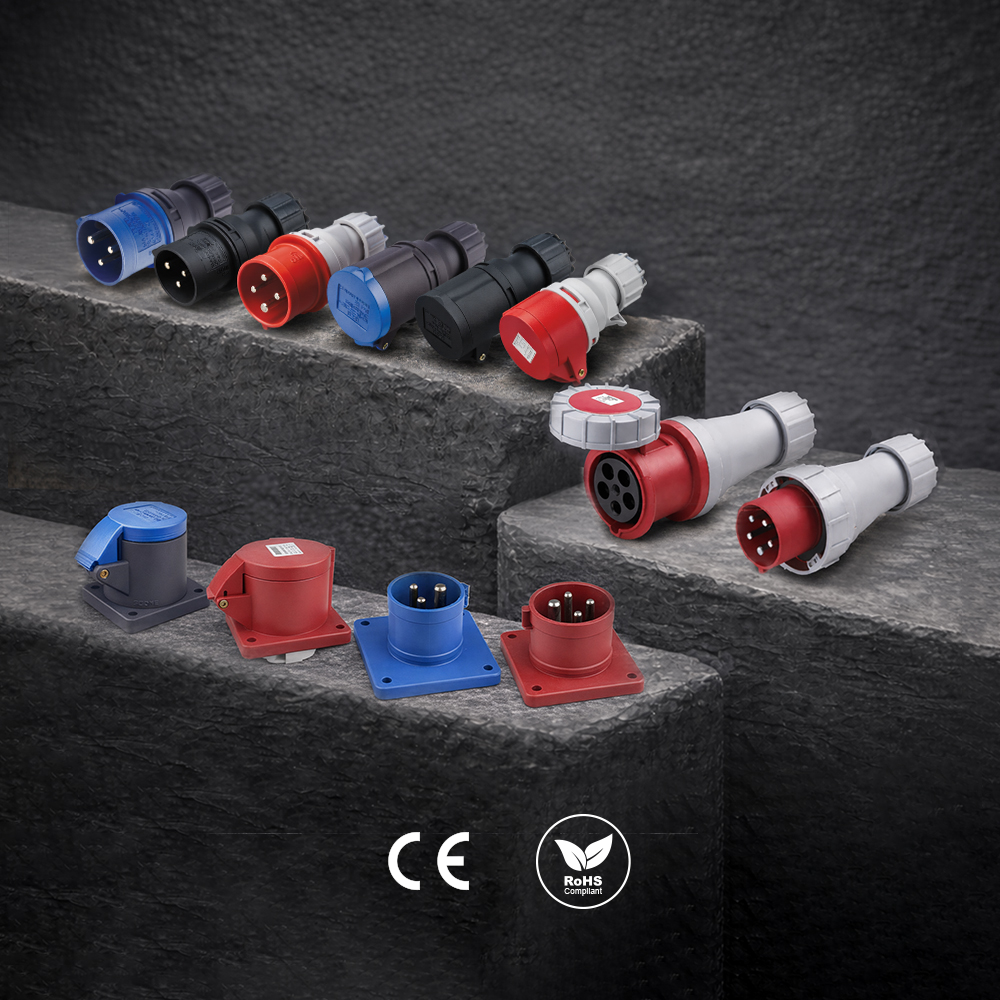 CEE Form Connectors
Have a Question?
Explore the full KUPO Power 101 FAQ Hub for answers to 30 more common questions about industrial power, or ask our team directly about your application.
