What can happen if the neutral connection opens or becomes loose?
What can happen if the neutral connection opens or becomes loose?
When the neutral opens in an unbalanced system, the neutral point is no longer clamped, and voltages shift unpredictably across the three phases. Some loads see dangerous overvoltage while others see dangerous undervoltage. The equipment connected to those shifted voltages is then exposed to damage, erratic operation, and difficult troubleshooting because the root cause is invisible in the voltage readings at any single point.
How a loose neutral causes voltages to shift across unbalanced loads
When a three-phase feeder with unbalanced loads has a solid neutral path, the neutral point is held steady by return current flowing back through that conductor. But if the neutral opens - from a disconnected splice, loose connector, damaged cable, or contact issue - that return path ceases. The neutral point floats, and voltage shifts to whatever the unbalanced three-phase loads force it toward. If Phase A has a heavy load and Phase B and Phase C have light loads, the floating neutral may shift far toward the lighter phases. Phase A measures much lower voltage to neutral than it should, while Phase B and Phase C measure much higher. Phase-to-neutral voltages can swing 30 percent or more from nominal when the neutral is open and the system is heavily unbalanced. As loads change throughout an event, the floating neutral point moves with them. Equipment that was running fine begins to see overvoltage or undervoltage. The crew does not understand why, because the main feeder voltage has not changed - the problem is internal to the distribution system, in a neutral connection that may be out of sight.
Symptoms and damage from voltage shift under open neutral conditions
The first sign of an open neutral is often erratic operation: a motor running slower or struggling, a variable frequency drive displaying a voltage error, lighting dim on some circuits and bright on others, or battery chargers refusing to operate. The symptoms point in different directions because the voltage problem differs on each phase. A meter at the main panel often reads approximately correct, but if the floating neutral is not where the meter assumes it is, the reading is misleading. The damage occurs when overvoltage stresses electronic components beyond their design rating. Equipment rated for 208 volts line-to-neutral might see 250 volts or higher on one pole. Solid-state electronics - variable frequency drives, power supplies, LED ballasts, digital controllers - are especially vulnerable. Overvoltage can fail capacitors, damage semiconductor junctions, or cause immediate thermal damage. In broadcasting and live events, equipment fails during the event, causing downtime and lost revenue. In industrial facilities, a loose neutral may remain undetected until an unplanned loading change suddenly creates dangerous conditions.
Why open neutral problems are difficult to find and prevention matters
The difficulty in troubleshooting an open neutral lies in the fact that the neutral conductor may appear undamaged - the problem is in the connection point itself: a loose terminal at a lug, a partially disengaged connector due to vibration, corroded contact inside a splice, or degradation in a connector interface. The contact failure may be remote from the main panel, buried in a wall, or deep in a temporary feeder installation. Measuring voltage at the main panel does not reveal it. A touring company or facility maintenance team should visually inspect all high-current neutral connections regularly, especially after events with heavy, unbalanced loads. Connectors should be checked for corrosion inside the contact cavity. Crimped lugs should be verified for proper termination. For permanent connections using K-LOK or PowerFit connectors, periodic visual inspection and a tactile check to ensure full mating can prevent most neutral-related problems. The effort to verify neutral connections regularly is far less costly than the damage or downtime from an open neutral discovered during an event.
Where KUPO Power's connectors keep the neutral connection secure
KUPO Power designs K-LOK 400A and K-LOK 150A single-pole cam-type connectors and PowerFit 400A keyed single-pole connectors (KSPC) specifically to maintain reliable high-current connections, including neutral conductors, across repeated mate and de-mate cycles. The contact interface is engineered to provide low contact resistance under load and to maintain consistent performance even after hundreds of cycles. The mechanical locking mechanism ensures that the connector stays fully seated and cannot partially disengage due to vibration or thermal stress. When a touring company, rental facility, or industrial venue uses K-LOK or PowerFit connectors for neutral carries, they are ensuring that the neutral path does not develop the kinds of contact resistance or mechanical looseness that cause open neutral problems. Regular visual inspection of the connector at the contact points and a tactile verify that it is fully mated remain good practice, but the connector design itself provides a level of reliability that older or lower-quality interfaces cannot match. The KUPO Power 101 FAQ Hub covers the full scope of connection security and system reliability.
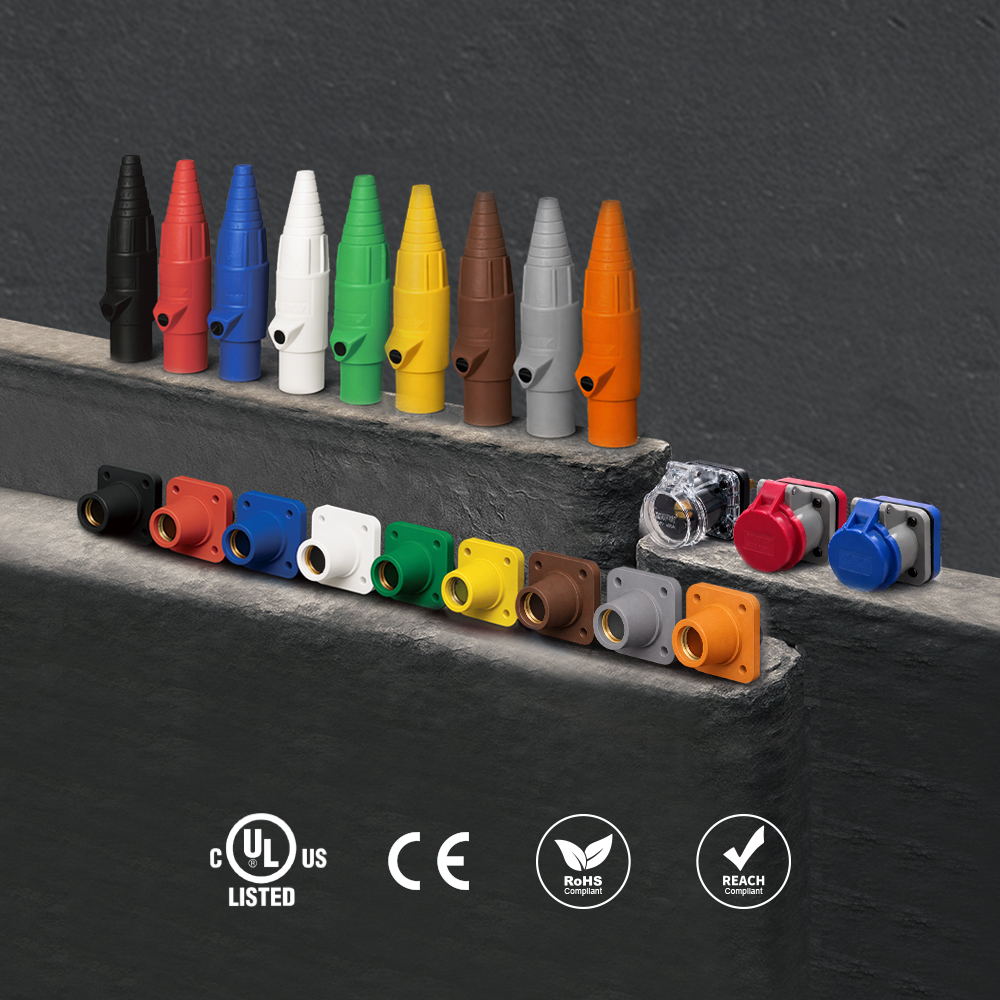 K-LOK 400A Single-Pole Cam-Type Connectors
 K-LOK 150A Single-Pole Cam-Type Connectors
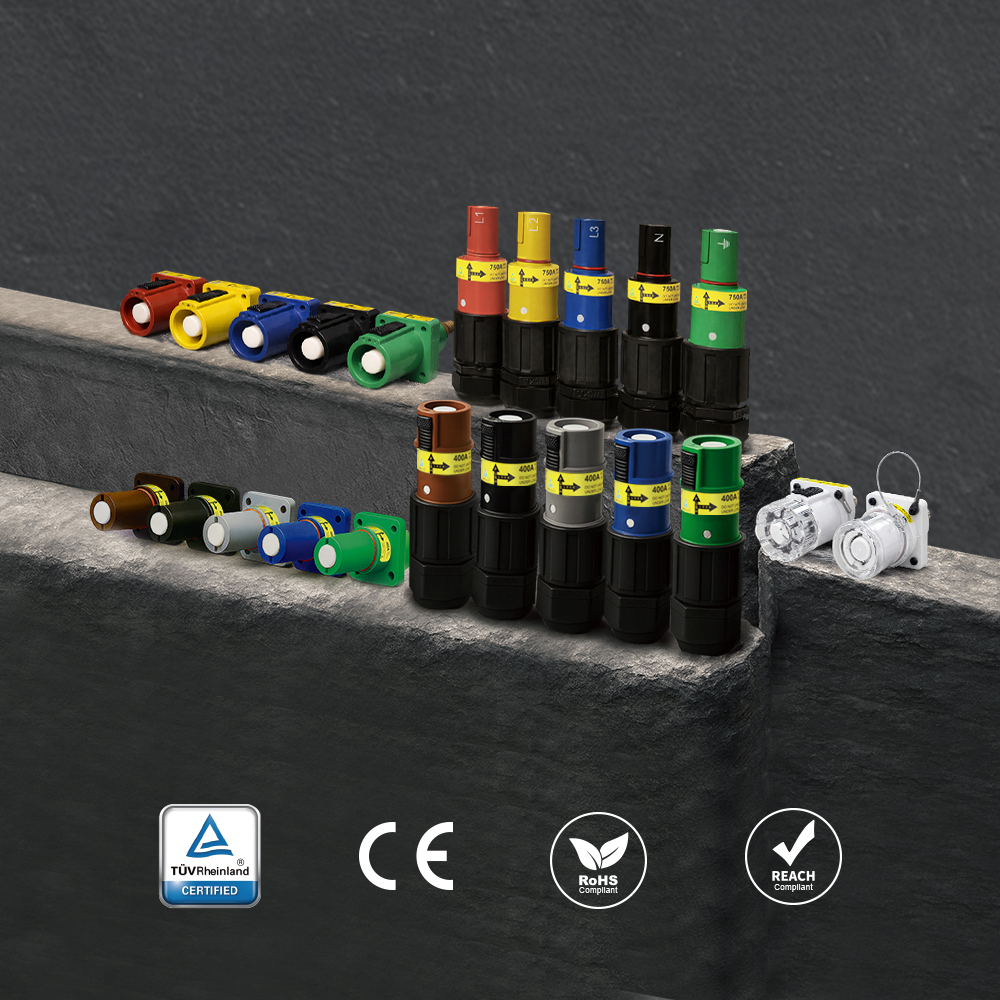 PowerFit 400A Keyed Single-Pole Connectors
Have a Question?
Explore the full KUPO Power 101 FAQ Hub for answers to 30 more common questions about industrial power, or ask our team directly about your application.
