How do you choose the right connector current rating for an industrial application?
How do you choose the right connector current rating for an industrial application?
Start with the actual load current, the duty cycle, and the installation conditions - not just the nominal system rating. A connector's published current rating tells you what it can handle under reference test conditions. Whether it can handle your specific application depends on temperature, cable size, environment, connection frequency, and whether the connector will ever be operated under load. The goal is to choose a connector that is suitable for real operating conditions, not just acceptable on paper.
Why the nominal rating on the datasheet is not the whole story
Connector current ratings are determined under standardized test conditions - typically a defined ambient temperature, a specific wire size terminated according to the manufacturer's instructions, and a test duration long enough to reach thermal equilibrium. These are fair tests. They produce repeatable, comparable numbers. But they are laboratory conditions, and real installations introduce variables that the test did not account for.
The first variable is ambient temperature. A connector tested at 20 or 25 degrees Celsius in a lab may be operating at 40 degrees or higher on an outdoor stage in summer, inside a sun-exposed road case, or near heat-producing equipment. Higher ambient temperature means less thermal headroom before the connector reaches its maximum rated temperature. The second variable is the cable terminated in the connector. If the cable is at the small end of the connector's wire range, the contact area between the conductor and the terminal may be less than optimal, which raises contact resistance and increases heat generation at the termination. The third variable is mating condition - a connector that has been mated and unmated hundreds of times in rental service may have higher contact resistance than a new unit straight from the box, because the contact surfaces have worn and oxidized over time.
The factors that should drive connector selection beyond the current number
Current rating is the starting point, but several other factors shape whether a connector is the right fit for a specific application. Duty cycle matters: a connector serving a continuous load (three hours or more at full current) runs hotter at steady state than one serving an intermittent load that cycles on and off. For continuous duty applications, selecting a connector with a rating comfortably above the actual load current provides the thermal margin the application demands.
Environment matters. Connectors used outdoors, in wet conditions, in dusty or corrosive atmospheres, or in high-vibration installations need to be evaluated for their environmental ratings (IP rating for ingress protection, mechanical vibration resistance) as well as their current rating. A connector that handles the current but cannot keep moisture out of the contact chamber will develop corrosion that raises contact resistance over time - turning a current-rated connector into a thermal problem.
Connection frequency matters. Connectors in touring and rental applications may be mated and unmated hundreds or thousands of times over their service life. The mechanical durability of the contact system - the number of mating cycles the contacts can endure before the contact pressure and alignment degrade - is a selection factor that has nothing to do with the current rating but directly affects how long the connector will maintain its rated performance. A connector chosen purely on current rating may be underspecified for an application where it is connected and disconnected daily.
Finally, load-breaking capability matters. If the connector will ever be disconnected while carrying current, it needs to be rated for that use case. A connector that can carry 400 amps but is not designed to break 400 amps under load is not a complete selection for an application where hot disconnection is part of the workflow.
A practical framework for working through the selection
The selection process works best when it starts with the application and works backward to the connector, rather than starting with a connector catalog and hoping something fits. The first step is to establish the actual operating current - not the nameplate of the equipment, but the measured or calculated current the connector will carry in service. The second step is to apply any derating for continuous duty, high ambient temperature, or other conditions that reduce the effective capacity. The third step is to verify that the connector's current rating, after accounting for the real conditions, provides adequate margin above the derated load. A common guideline is to select a connector rated for at least 125% of the continuous load current, consistent with the sizing rules most codes apply to conductors and protective devices.
After the current rating is satisfied, the remaining selection factors - environmental rating, mating cycle life, load-breaking capability, and compatibility with the rest of the connector ecosystem in the installation - narrow the choice to a specific family and configuration. The result is a connector that is matched to the application, not just to a number on a drawing.
Where KUPO Power's connector families fit into the selection process
The selection factors above - current rating, duty cycle, environment, mating frequency, load-breaking, and ecosystem compatibility - are exactly the considerations that KUPO Power's connector families are designed around. K-LOK 400A and K-LOK 150A single-pole cam-type connectors are KUPO's equivalents to the Camlok ecosystem used in North American touring, film, and live event work, where high mating cycle counts and field durability are baseline requirements. PowerFit 400A is the Powersafe-pattern keyed single-pole connector (KSPC) standard in European stage and event power, offering keyed mating that prevents cross-connection. CEE Form connectors cover the IEC 60309 international pin-and-sleeve standard, with IP-rated housings designed for environmental protection in industrial settings. Choosing from one connector ecosystem across the entire installation keeps the current ratings, the mechanical interfaces, and the mating protocols consistent from source to load. For the full picture of how connector selection fits into cable sizing, protection coordination, and system design, the KUPO Power 101 FAQ Hub covers the complete system.
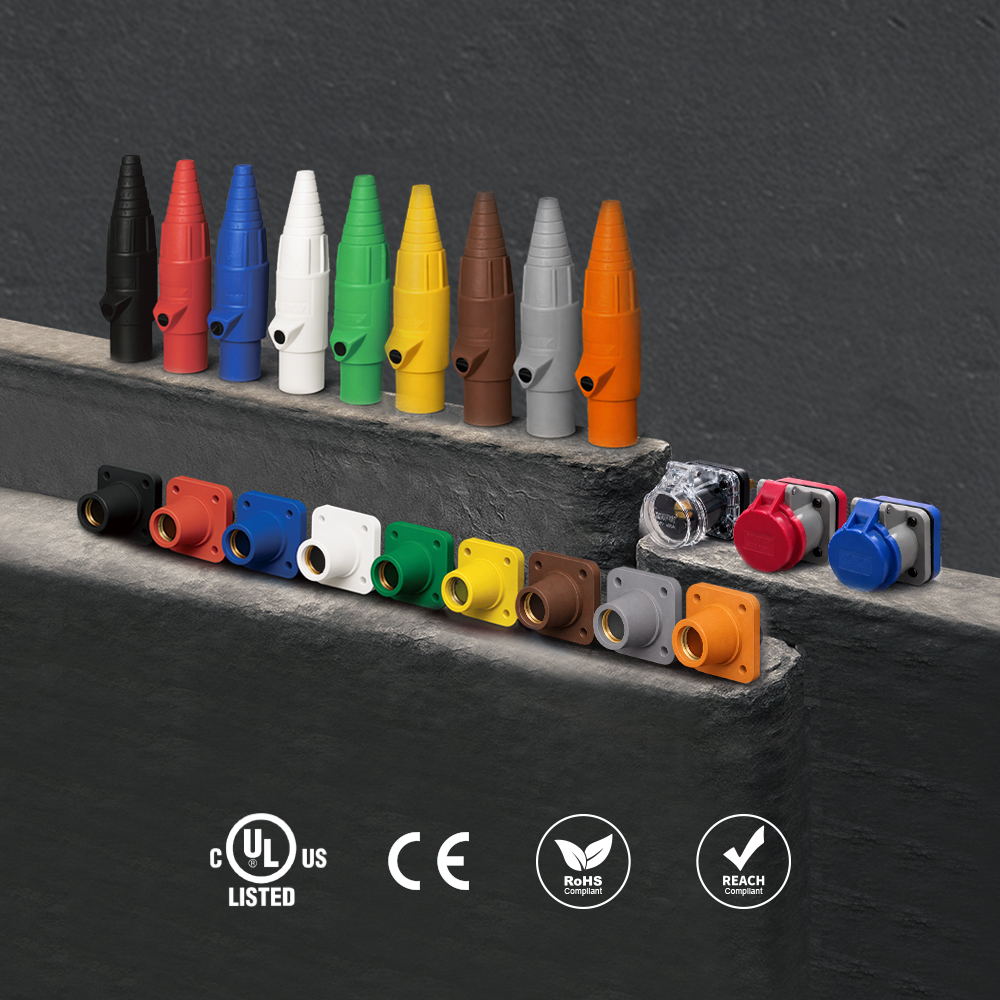 K-LOK 400A Single-Pole Cam-Type Connectors
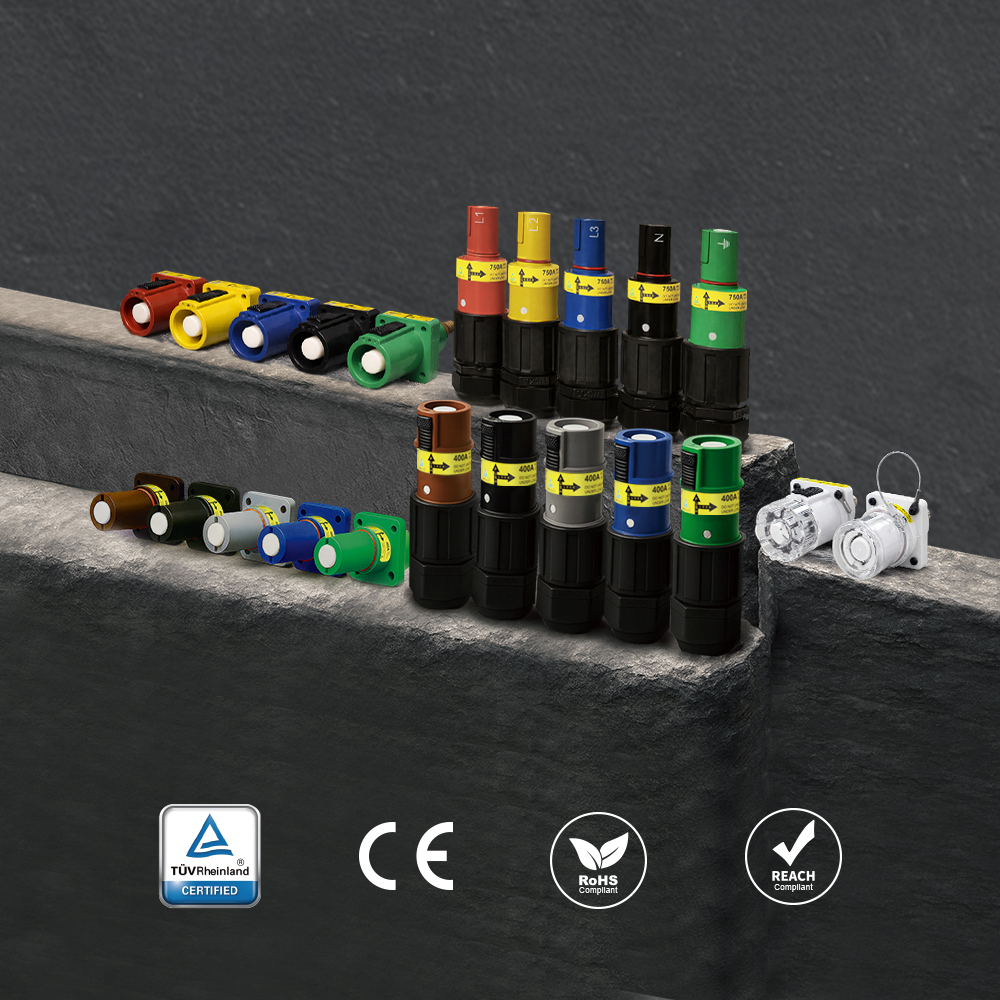 PowerFit 400A Keyed Single-Pole Connectors
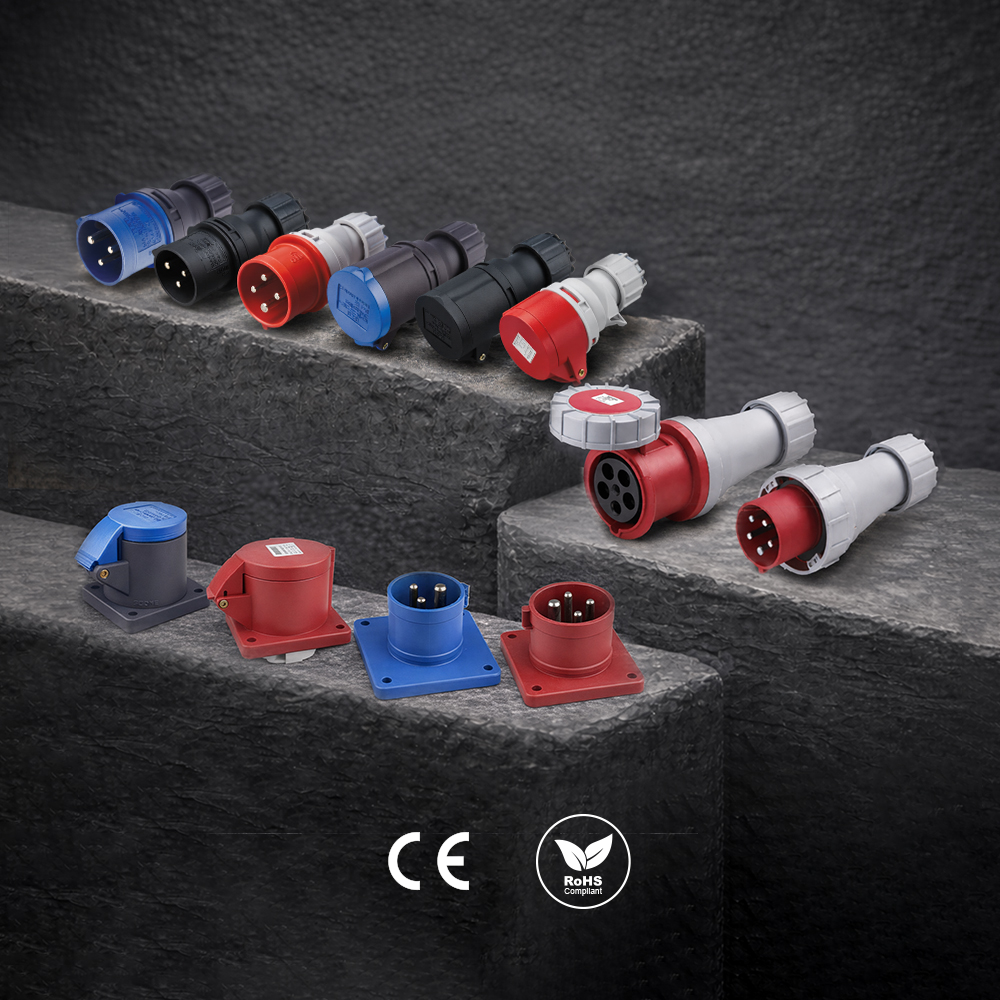 CEE Form Connectors
Have a Question?
Explore the full KUPO Power 101 FAQ Hub for answers to 30 more common questions about industrial power, or ask our team directly about your application.
