When should you use a CEE form connector instead of a single-pole high-current connector?
When should you use a CEE form connector instead of a single-pole high-current connector?
CEE form connectors make sense when your application calls for a standardized multi-pin interface that carries all phases, neutral, and earth in a single compact housing. Single-pole high-current connectors are the better choice for circuits that exceed the current rating limits of multi-pin designs, or when you need the routing flexibility and field-replaceability that individual conductor connectors provide. The right choice depends on your current level, how the system is wired, and what happens when something on set needs to be swapped out fast.
The case for CEE form - when standardization is your biggest win
CEE form connectors are built on the IEC 60309 standard, which means a CEE form plug from one manufacturer will mate safely with a socket from another. That standardization is not a small thing on a touring production or in a rental inventory. When every piece of equipment in your fleet speaks the same connector language, the crew moves faster, mistakes become harder to make, and training becomes simpler. A technician or electrician can walk onto a stage in a different venue, in a different country, and recognize the connector immediately - the color coding, the keying, the voltage marking, all standardized. In broadcast facilities and permanent installations, that consistency compounds over years.
CEE form connectors also offer built-in sequence protection. The earth pin is longer than the phase and neutral pins, so it engages first when you plug in and disengages last when you pull out. That matters. It means ground is always live before the phases touch, and ground is still live after the phases have disconnected - exactly the sequence most electrical codes want to see. The whole multi-pin assembly plugs and unplugs as one action, so there is no possibility of accidentally connecting a phase before the ground is established, or leaving a phase live after the ground has dropped. That mechanical guarantee is valuable on a loaded stage where someone might be tired or working in the dark.
Where single-pole connectors push higher and work better at the extremes
The moment your circuit demand climbs above about 125 amps, CEE form becomes physically impractical. Cramming multiple high-current pins and sleeves into a single housing means larger contacts, higher mating force, heavier overall weight, and real challenges with heat dissipation. Single-pole high-current connectors - like the K-LOK 400A cam-type or the PowerFit 400A keyed connector - handle 400 amps per conductor. Because each connector carries only one conductor, the design scales up gracefully. The contact area, the pin diameter, the housing volume, all optimized for one job.
On a touring stage, a feature film set, or a large temporary power installation, single-pole connectors are standard. A rock tour running a 400-amp feeder from the generator to the first distribution box needs single-pole because CEE form cannot deliver that current capacity. A film production running multiple camera trucks simultaneously, each drawing 200 - 400 amps, uses single-pole cam-type connectors. A broadcast uplink truck with three diesel generators running 400-amp feeders to a distribution splitter uses single-pole throughout. These are not edge cases - they are the backbone of live events and temporary industrial installations.
Routing flexibility and field replaceability - practical advantages on set
Single-pole connectors offer something CEE form cannot: independent routing of each conductor. If you have a three-phase circuit and one phase conductor needs to take a different physical path than the others - around a rigging structure, through a separate cable tray, down a different wall penetration - single-pole lets you do that. With CEE form, all conductors exit the same multi-pin housing on the same cables, so they travel together. That constraint is acceptable in permanent installations but can be limiting on location.
Field replaceability also tips the scale toward single-pole. If a single-pole connector gets damaged - a pin bent, a contact abraded, a keying pin chipped - you remove that one connector and replace it with a new one. The other four conductors stay live and intact. With a CEE form connector, a single damaged pin means the entire multi-pin assembly has to come off the circuit, the connector has to be repaired or replaced, and the whole assembly goes back in. On a production schedule where downtime costs thousands per hour, that difference matters.
Where KUPO Power's connector families help you make the right choice
KUPO Power builds both CEE form and single-pole connectors, so you can stay within one supplier ecosystem regardless of which family suits the application. For circuits up to about 125 amps where standardization, compact footprint, and self-sequencing are the priorities, CEE form connectors deliver on all three. For higher-current feeders and temporary installations where flexibility and field replaceability matter more, K-LOK 400A and K-LOK 150A cam-type connectors (the Camlok-pattern standard in North America) and PowerFit 400A keyed single-pole connectors (the Powersafe-pattern standard in Europe) handle the current and the operational demands. The choice is not about which is better in absolute terms - it is about which one fits your system architecture, your operating practice, and your current budget. Having all three families from one manufacturer means the connector layer stays consistent from feeder to branch distribution, and your crew works with familiar parts and procedures across the whole installation. The KUPO Power 101 FAQ Hub covers how these families fit together in system design.
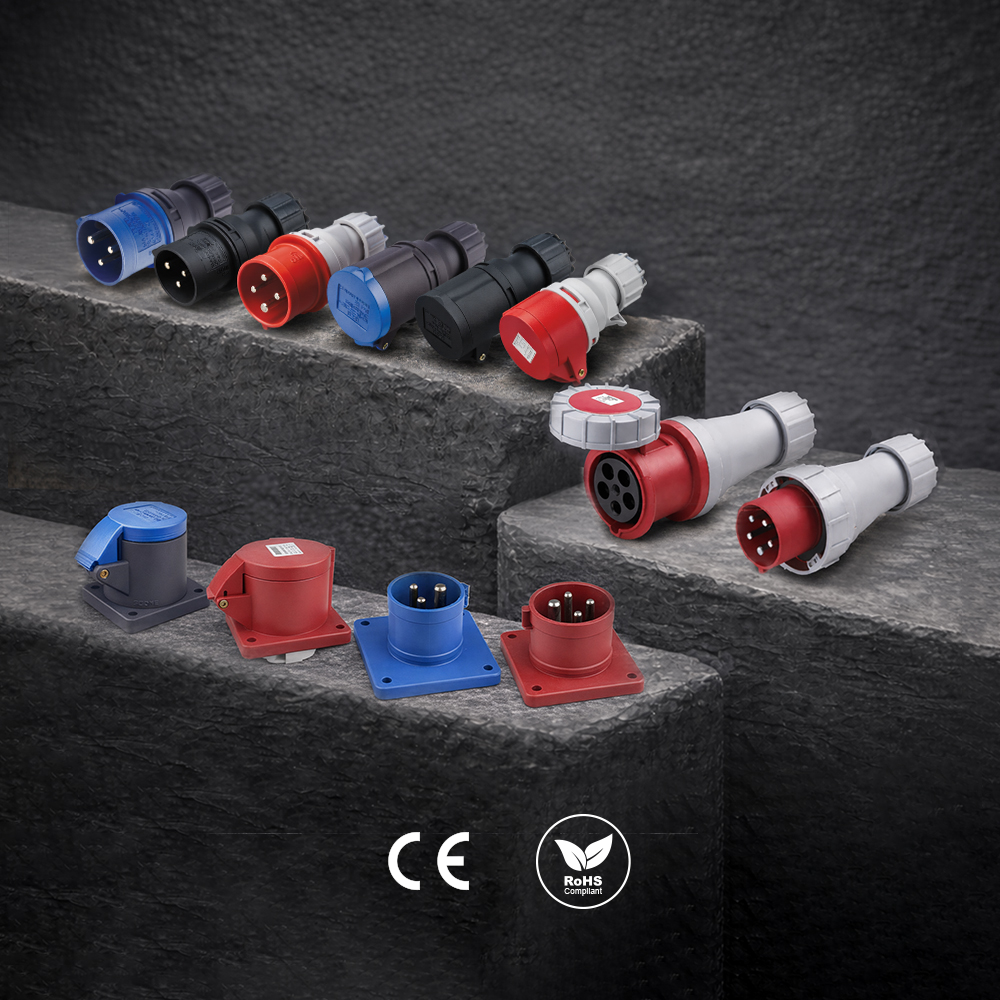 CEE Form Connectors
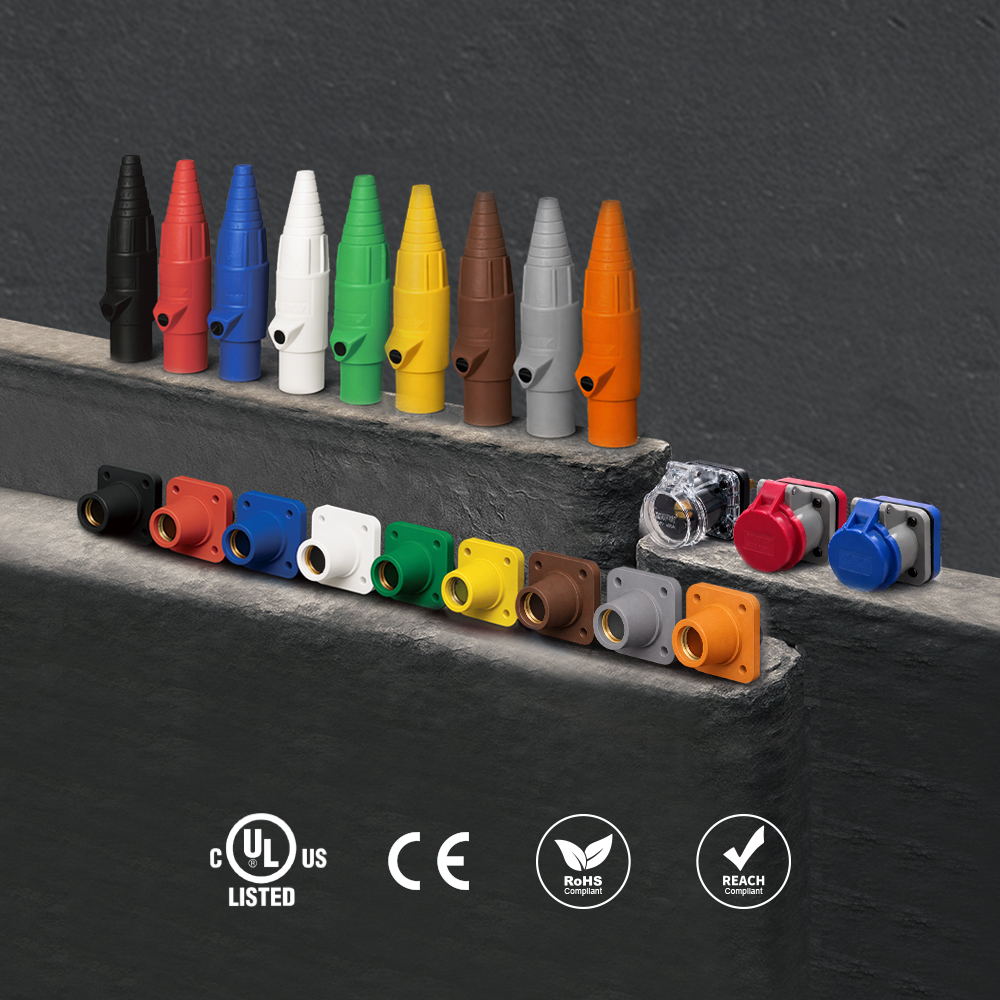 K-LOK 400A Single-Pole Cam-Type Connectors
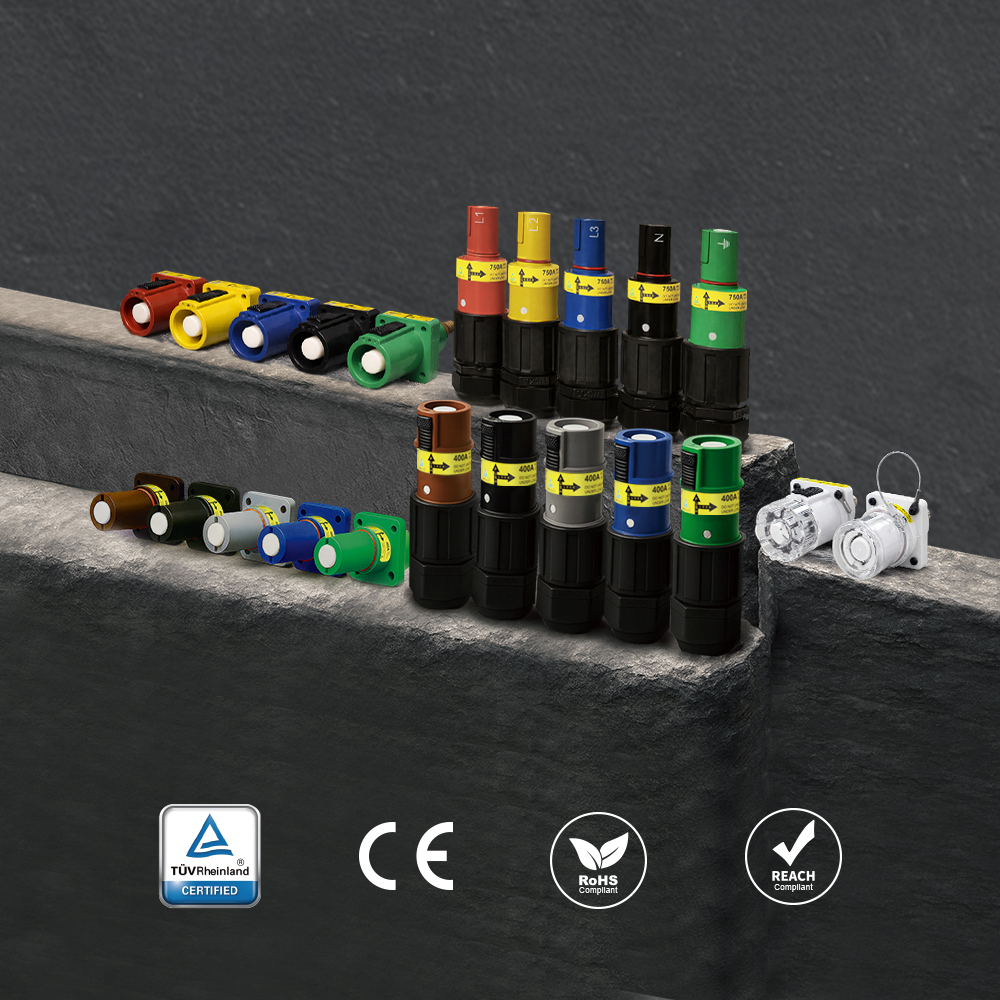 PowerFit 400A Keyed Single-Pole Connectors
Have a Question?
Explore the full KUPO Power 101 FAQ Hub for answers to 30 more common questions about industrial power, or ask our team directly about your application.
