What is the difference between single-phase and three-phase power?
What is the difference between single-phase and three-phase power?
Single-phase power uses one alternating voltage waveform that alternates in polarity at the power frequency. Three-phase power uses three separate waveforms, each offset 120 degrees from the others, all arriving together to a common load. The two serve different markets and different power demands.
How single-phase and three-phase waveforms differ at the source
Single-phase power is the most straightforward form of alternating current. Two wires carry voltage that rises and falls in one smooth sinusoidal cycle. The voltage oscillates around zero, swinging positive and negative at the line frequency (50 Hz in Europe and much of the world, 60 Hz in North America). This is the same waveform that comes out of a standard residential outlet. It is simple, requires only two wires for the main circuit (plus a ground), and works fine for equipment with modest power requirements and no special starting needs.
Three-phase power delivers three separate sinusoidal waveforms on three separate conductors, each one reaching its peak voltage at a different instant. Phase A reaches its peak, then 120 degrees later Phase B reaches its peak, then 120 degrees later Phase C reaches its peak. The three waveforms overlap continuously, so at any moment, at least one phase is delivering current to the load. This overlapping, staggered arrival of energy is the core reason three-phase systems deliver power more smoothly and more efficiently than single-phase, especially for rotating equipment and high-current applications.
Why three-phase dominates large industrial loads and motor-driven systems
Three-phase power is the standard in industrial and commercial facilities worldwide because three simultaneous power pulses smooth out the delivery of energy to the load. A three-phase motor starts and runs on the rotating magnetic field created by the three offset waveforms - it self-starts without need for external starting circuits, and it delivers constant torque across the rotation instead of the pulsing torque of single-phase motors. This is why touring companies, film crews, broadcast trucks, and large event operations all prefer three-phase feeders when they can get them. The smoother, more constant power delivery reduces harmonics, cuts down on voltage fluctuations, and puts less stress on cables and transformers.
The efficiency advantage is equally important. Because the three phases are continuously staggered, three-phase systems deliver their rated power with only about 1.73 times the current of single-phase at the same power level. This means thinner wires, lower losses, and less heat in the infrastructure. For theme parks running dozens of rotating rides and high-current attractions all day, for broadcasting facilities with heavy lighting and cooling systems, and for rental companies managing large temporary power networks, three-phase infrastructure is the only practical choice. Single-phase would require impossibly heavy cable runs to deliver equivalent power.
When single-phase is still the right answer - and how the two coexist on the same system
Single-phase circuits still serve important roles, even in predominantly three-phase facilities. Control circuits, lighting loads, battery chargers, and many modern power supplies work equally well on single-phase voltage, often at lower cost and lower complexity. Many industrialized buildings have both: a three-phase main feeder that serves the heavy lifting - motors, large compressors, industrial ovens, air handlers - and single-phase branch circuits that handle lighting, wall outlets, and miscellaneous loads. A facility maintenance team managing a large industrial campus might have a three-phase main service bringing in power, but then distribute that power through transformers that step it down to single-phase for the office areas while feeding three-phase to the production floors.
The coexistence works because three-phase infrastructure can supply both. A three-phase transformer can step voltage up or down and also accommodate single-phase loads by connecting between two of the three phases. On touring productions, the touring company may arrive with single-phase loads - some lighting instruments, some chargers, some monitoring equipment - but the house power is three-phase. The venue's electrical team runs adapters and distribution boxes that split the three-phase service into three single-phase circuits that can feed those mixed loads without overloading any one phase.
Where KUPO Power's connectors serve both single-phase and three-phase systems
KUPO Power manufactures high-current connectors across the full range of industrial power distributions - K-LOK 400A and K-LOK 150A single-pole cam-type connectors, PowerFit 400A keyed single-pole connectors, and CEE Form multi-pin connectors - all of which work equally well in single-phase, three-phase, and mixed-phase installations. The connector itself does not care whether it is carrying a phase conductor, a neutral, or a ground - it is rated for current and voltage, and those ratings apply regardless of the signal it carries. In practice, a touring load-in with a mix of single and three-phase equipment uses the same K-LOK 400A plug for a three-phase main feeder and the same connector type for a single-phase branch circuit downstream. The standardization at the connector layer means power distribution planners can focus on matching the right conductor to the right load without needing to change connector families. The KUPO Power 101 FAQ Hub covers how to size and sequence all these different applications safely.
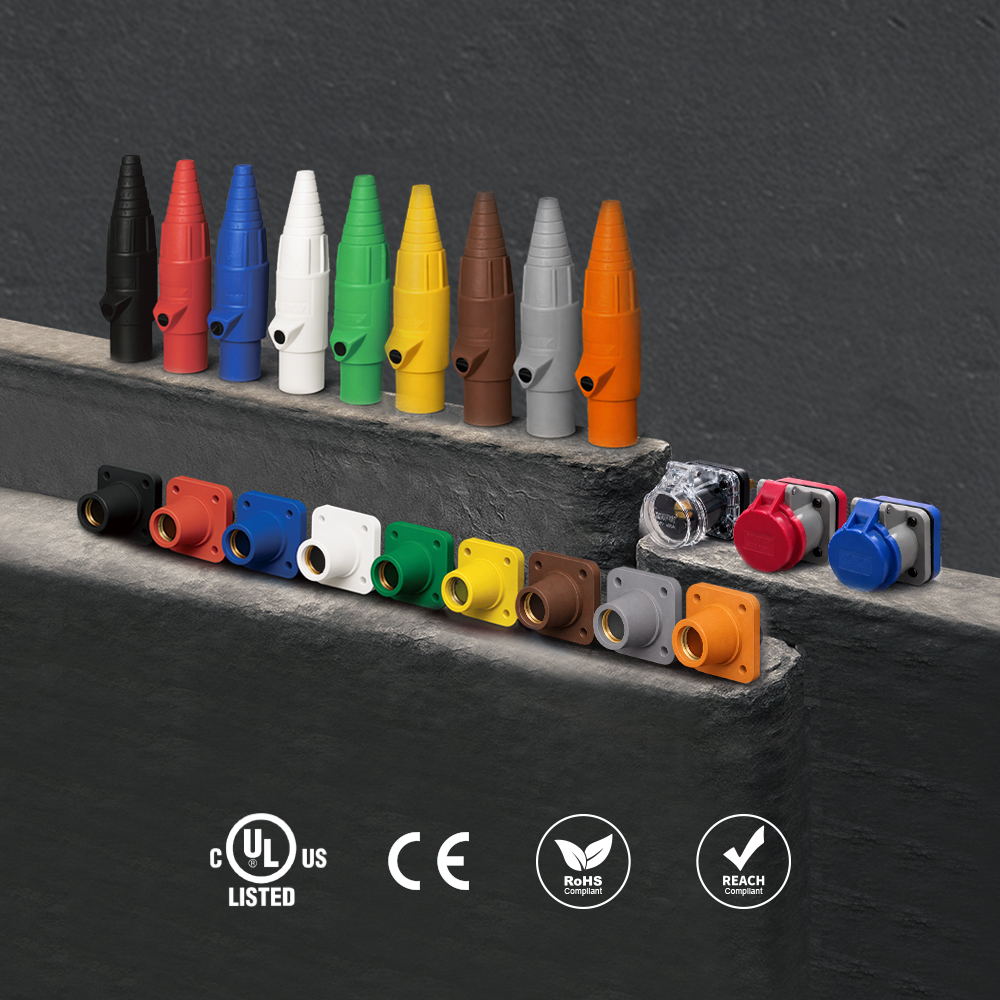 K-LOK 400A Single-Pole Cam-Type Connectors
 K-LOK 150A Single-Pole Cam-Type Connectors
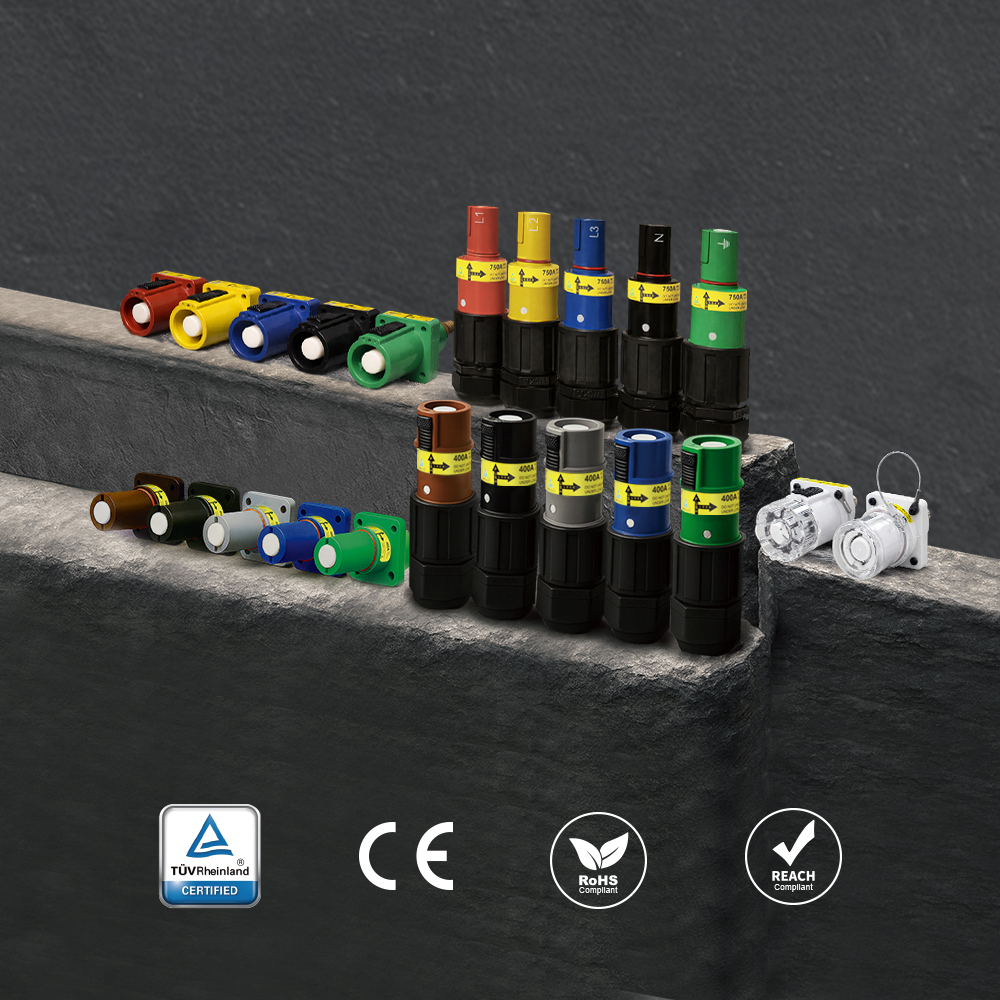 PowerFit 400A Keyed Single-Pole Connectors
Have a Question?
Explore the full KUPO Power 101 FAQ Hub for answers to 30 more common questions about industrial power, or ask our team directly about your application.
