What is a power distribution box, and what does it do?
What is a power distribution box, and what does it do?
A power distribution box takes one large incoming electrical supply and breaks it into several smaller, controlled outputs that downstream equipment can safely use. It is the piece that turns raw feeder power into something a crew can plug into, protect, and troubleshoot without guesswork.
Why a single feeder almost never lands directly on the equipment that uses it
On most industrial jobs, the power coming from a generator, a building tie-in, or a company switch arrives as one large feed — often hundreds of amps on a single set of cables. The equipment that actually consumes the power, however, is rarely one big load. A film set has lighting fixtures, a video village, a camera cart, and craft service. A touring rig has dimmers, motors, audio amps, and follow spots. A facility has machines, work cells, and convenience outlets. Each of those loads draws a different amount of current, and each needs to be turned on, turned off, and protected on its own.
The distribution box is the bridge between the one large feed and the many smaller loads. Without it, every load would have to be hard-wired into the feeder — slow, inflexible, and unsafe. With it, the crew gets a clean panel of protected outlets that can be plugged, unplugged, and reconfigured as the job changes. When something goes wrong on one circuit, only that circuit drops, not the entire feed.
What is actually happening inside the box between the input lugs and the output connectors
At its simplest, a distribution box has three jobs stacked on top of each other. The first job is the electrical split: incoming conductors land on a set of busbars, which are solid metal bars sized to carry the full incoming current. From those bars, several smaller circuits tap off — each one running to its own protective device and then out to a connector on the face of the box.
The second job is overcurrent protection. Each branch circuit passes through a circuit breaker (or, in some designs, a fuse) sized to match the wire and the connector downstream. If a load draws more current than the circuit can safely handle — because of an overload or a short circuit — the breaker opens and isolates that branch. The rest of the box keeps running, and nothing downstream gets cooked.
The third job is mechanical and human. The box has a grounded enclosure, labeled outputs, an accessible disconnect or main breaker, and connectors that are rated for the current they carry. That combination is what lets a working electrician walk up, read the panel, and trust what they are plugging into. Strip any one of those three jobs out and you no longer have a distribution box — you have a junction.
How to tell a real distribution box from something that just looks like one
The cheapest mistake in this category is treating a passive splitter as if it were a distribution box. A passive splitter divides power but adds no protection — meaning a fault on one output can stress the entire upstream feed. A real distribution box gives each output its own protective device sized to the smallest thing it could legitimately feed, so a fault stays local.
Beyond that, the things worth checking before a box goes into service are the current rating of the input lugs and busbars (they have to handle the full feeder, not just the sum of typical loads), the rating and trip curve of each branch breaker, the type and quality of the output connectors, the grounding path from the enclosure to the feeder ground, and the labeling on the face. A box with clear labeling saves a crew real time on a busy load-in. A box without it slows everything down and invites mistakes in the dark.
Where KUPO Power fits into this picture
KUPO Power doesn't build distribution boxes — what KUPO Power makes is the connector ecosystem distribution gear is built around. The K-LOK 400A and K-LOK 150A single-pole cam-type families are KUPO's drop-in equivalents to the Camlok ecosystem that touring, film, and live event crews already use across North America. The PowerFit 400A keyed single-pole connector is the Powersafe-pattern equivalent favored by European stage and event power. CEE Form connectors round out the IEC 60309 international pin-and-sleeve standard. If you're speccing or assembling distribution gear, KUPO Power is the connector partner that lets your build interoperate with the rest of the world's hardware. For the full picture of how connectors, cables, and breakers come together as one system, the KUPO Power 101 FAQ Hub is the fastest way in.
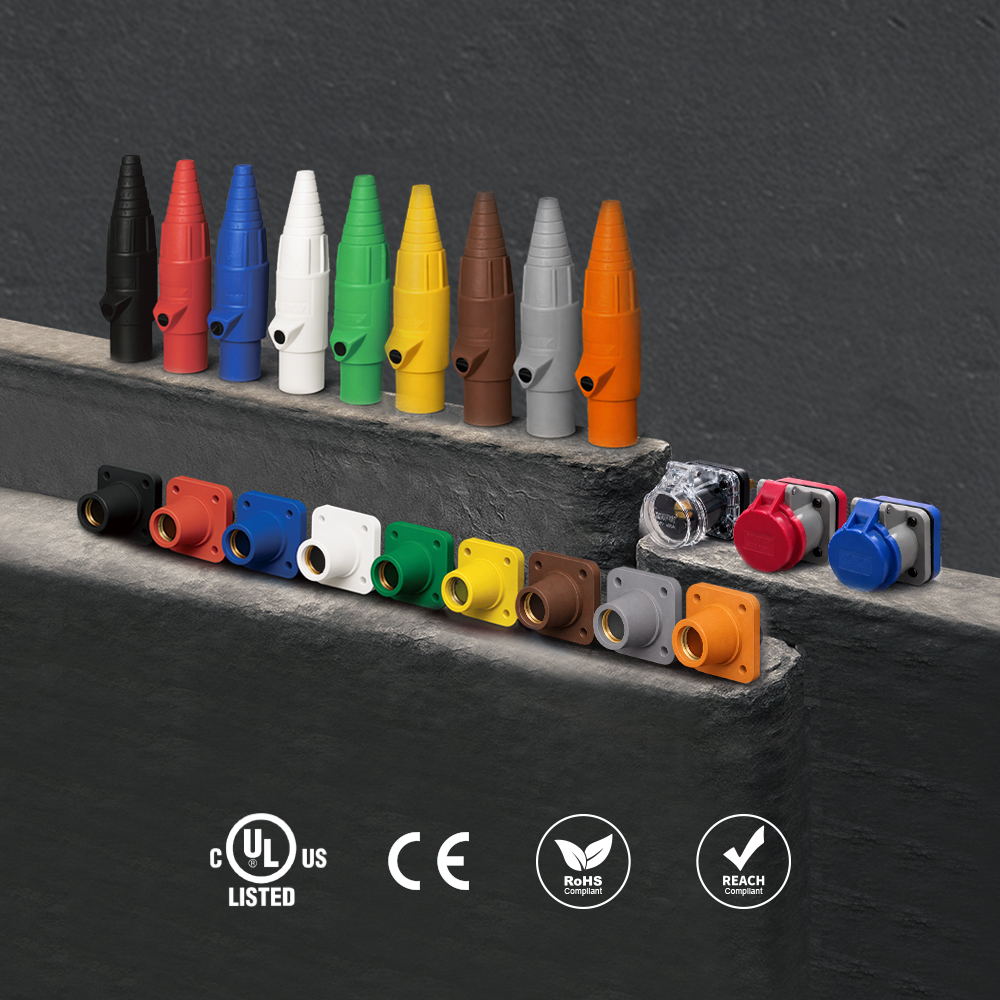 K-LOK 400A Single-Pole Cam-Type Connectors
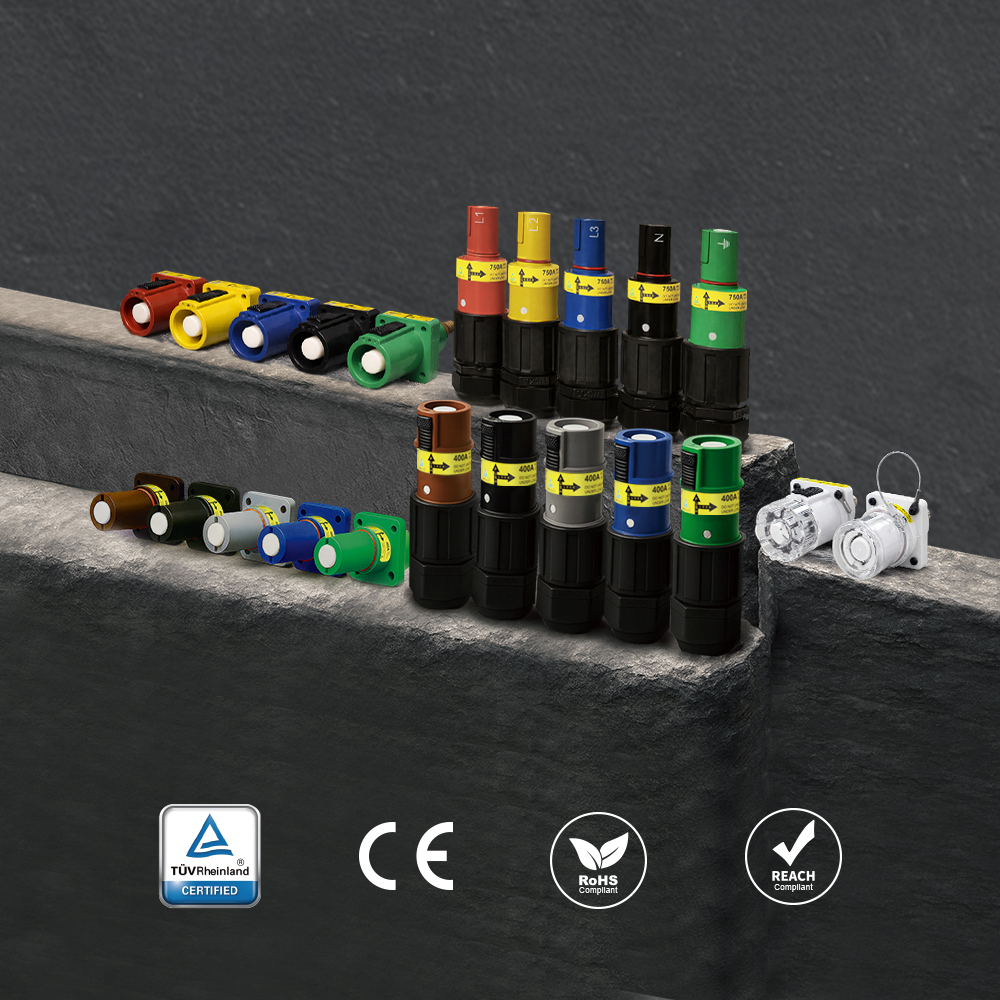 PowerFit 400A Keyed Single-Pole Connectors
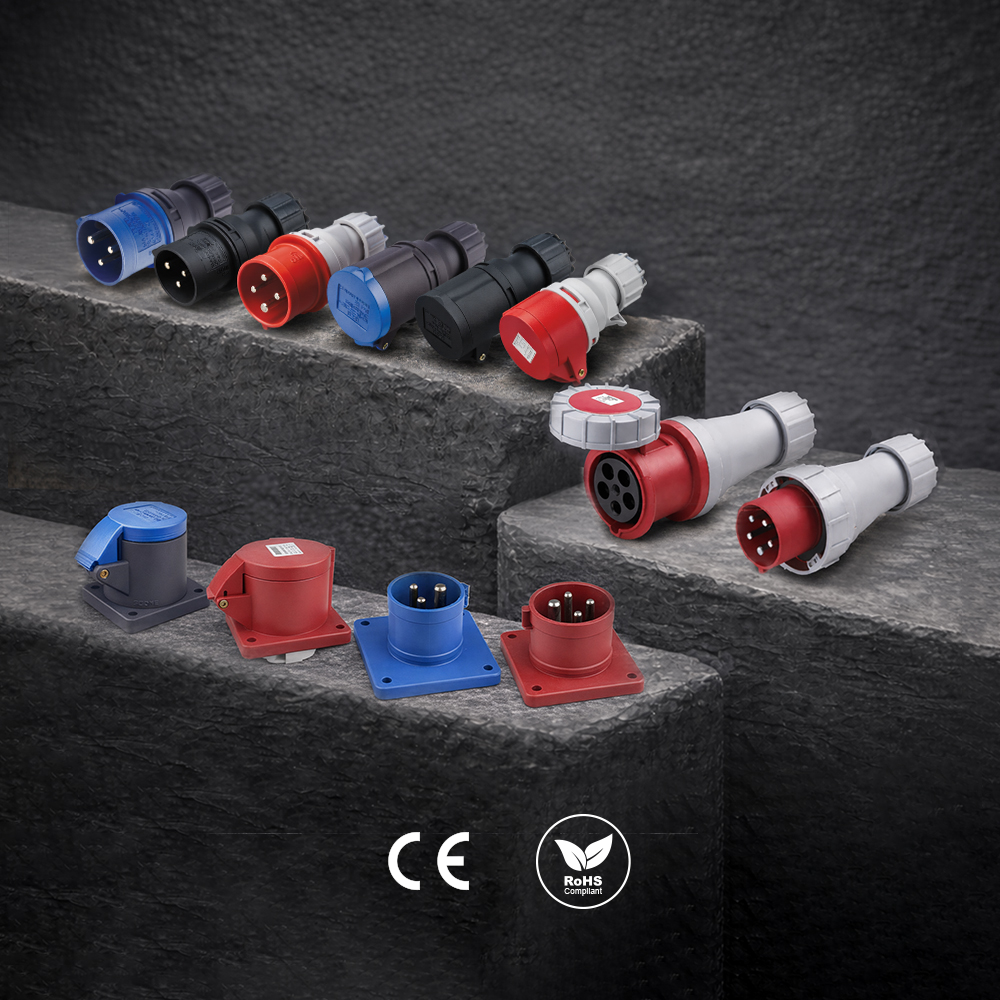 CEE Form Connectors
Have a Question?
Explore the full KUPO Power 101 FAQ Hub for answers to 30 more common questions about industrial power, or ask our team directly about your application.
