What does the neutral do in a three-phase system?
What does the neutral do in a three-phase system?
In a three-phase system, the neutral conductor provides a return path for current when the three phase loads are not equally balanced across all three phases. Because three-phase systems are perfectly offset, the neutral carries zero current only in perfectly balanced conditions - most real installations have unbalanced loads, so the neutral becomes essential for voltage stability.
How the neutral returns unbalanced current and why perfect balance never happens
In theory, if a three-phase feeder supplied three identical loads, one on each phase, the three return currents would arrive back at the source at exactly the same instant, 120 degrees apart. The three waveforms would cancel mathematically, and the neutral would carry zero amps. But real industrial and commercial sites do not have three identical loads. A film set might have 150 amps of lighting on Phase A, 80 amps of motor load on Phase B, and 60 amps of charging equipment on Phase C. The three return currents are different sizes, different waveforms, and they do not cancel. The neutral carries the vector sum of whatever current the three phases need to return - sometimes it is small, sometimes it is substantial, but it is almost always non-zero. Without a neutral, that excess unbalanced current has nowhere to go, and voltage distortion results.
The neutral is especially critical in systems that mix single-phase and three-phase loads. A broadcast facility might have a three-phase feeder bringing in 400 amps, but then distribute it to lighting loads connected line-to-neutral, to motor loads connected across all three phases, and to distribution subpanels where the loads are unknown. In that mixed environment, the neutral is no longer optional - it is the return path for every single-phase load and for all the unbalance from the three-phase loads. Removing the neutral or allowing it to become loose in that kind of installation creates immediate voltage problems.
Why unbalanced systems can create dangerously unstable voltages without a healthy neutral
When loads on a three-phase system are unbalanced, each phase voltage shifts relative to the neutral point. If the neutral path is solid and the grounding is good, the neutral point stays centered, and all three phase voltages remain approximately equal and symmetrical. But if the neutral opens or becomes high-resistance, the neutral point floats. Phase A might see a different voltage than it did with a healthy neutral, Phase B might see yet another voltage, and Phase C might see a third. These shifts are not small - in severely unbalanced systems with a floating neutral, voltage shifts of 10 percent, 20 percent, or more can occur on a single phase while another phase is nearly unloaded. A piece of equipment designed for 208 volts line-to-neutral might see 250 volts on one pole and 180 volts on the other, depending on the imbalance.
Equipment responds poorly to this kind of voltage asymmetry. Motor controllers, variable frequency drives, power supplies, and lighting ballasts all assume a relatively symmetrical and stable voltage. When that assumption breaks, they struggle. Fans slow down or stop. Compressors overheat. Lighting flickers or dims. In the worst cases, solid-state electronics are damaged by the overvoltage condition on one phase. A touring company or broadcast truck managing mixed single-phase and three-phase loads cannot afford voltage instability. A healthy neutral path is what keeps everything stable in that environment.
Mixed-load systems and the neutral in branch circuits and transformers
Industrial facilities and touring installations often use a three-phase main feeder with step-down transformers to serve both three-phase and single-phase branch circuits. A large event venue might have a 400-amp three-phase feeder, but then distribute it through transformers to create multiple 208-volt and 120 / 240-volt panels. Each panel needs a neutral bonded back to the source. The touring company or film production brings in a three-phase feeder and distributes it through branch circuits to feed motor loads and single-phase lighting. Every neutral connection must be robust - a loose splice or contact issue in a connector degrades the neutral path and causes voltage shift in an unbalanced load condition. The neutral must be in good condition everywhere it appears.
Where KUPO Power's connectors carry the neutral path reliably
KUPO Power manufactures K-LOK 400A and K-LOK 150A single-pole cam-type connectors and PowerFit 400A keyed single-pole connectors (KSPC) that are used throughout three-phase feeder and branch circuit installations to carry all conductors - phases, neutral, and ground - in both balanced and unbalanced loading scenarios. In practical terms, the neutral connector carries the same current as any phase conductor when the load is unbalanced, so it is rated and built for equivalent current capacity and reliability. The cam-type and KSPC contact interfaces are designed to maintain low contact resistance under repeated mate and de-mate cycles, so the neutral connection does not degrade over time. When a rental company, event venue, or facility maintenance team uses K-LOK or PowerFit connectors for feeder connections, they are ensuring that the neutral has the same quality and reliability as any phase. The KUPO Power 101 FAQ Hub covers the full picture of how neutral design and maintenance fit into system reliability.
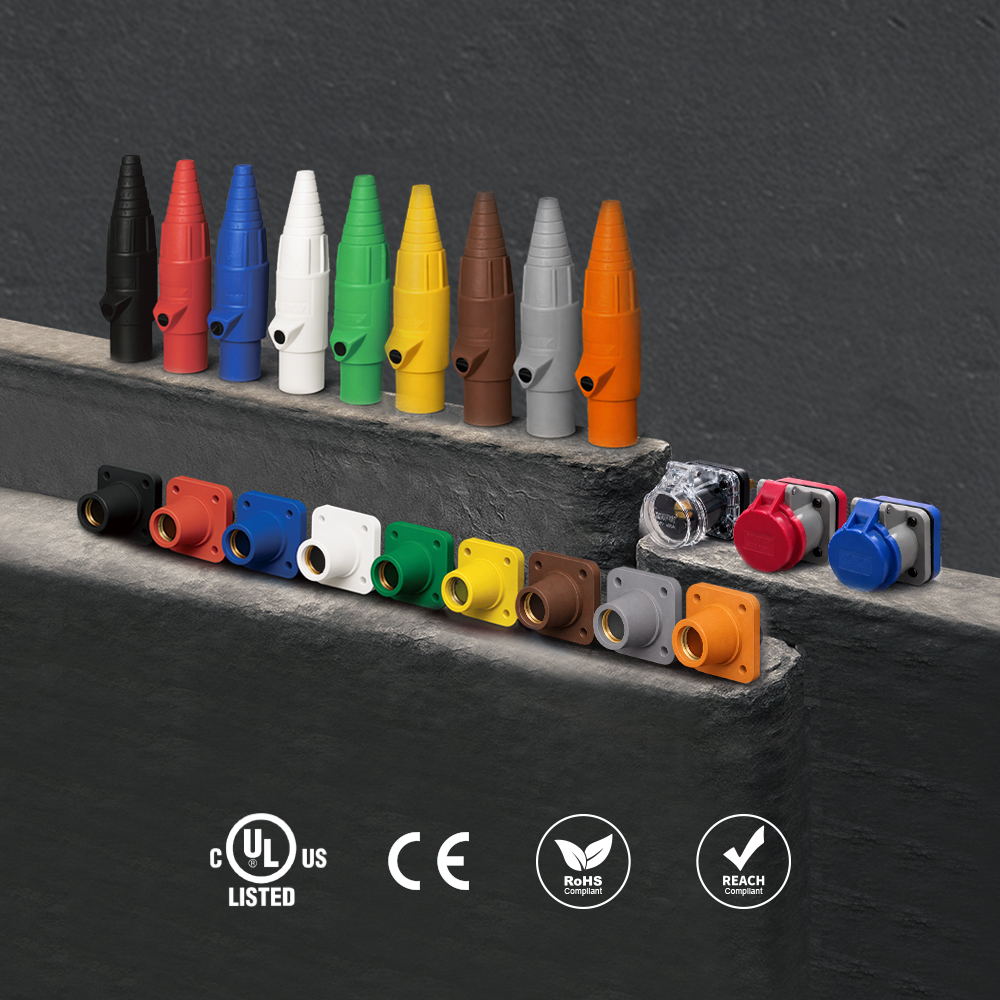 K-LOK 400A Single-Pole Cam-Type Connectors
 K-LOK 150A Single-Pole Cam-Type Connectors
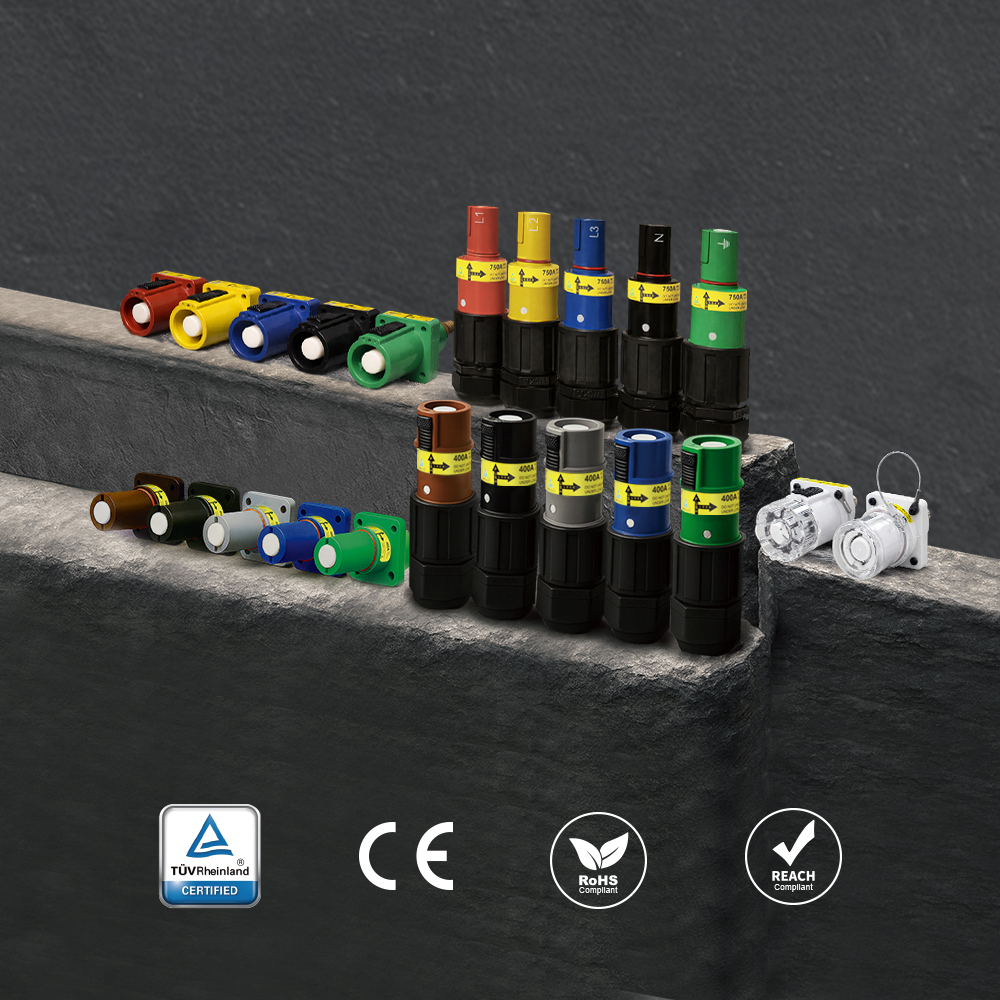 PowerFit 400A Keyed Single-Pole Connectors
Have a Question?
Explore the full KUPO Power 101 FAQ Hub for answers to 30 more common questions about industrial power, or ask our team directly about your application.
