Why must cable size, connector rating, and upstream protection be matched together?
Why must cable size, connector rating, and upstream protection be matched together?
A circuit is only as safe as its weakest rated component. If the cable, the connector, and the upstream protective device are not coordinated, one of them will be exposed to current it was not designed to handle - and the protective device may not trip in time to prevent the damage. Coordination means sizing all three as one system, not selecting each one independently.
The failure that coordination prevents - and why it only shows up during a fault
During normal operation, a mismatched circuit can look perfectly fine. The load draws its expected current, the cable stays cool, the connector feels normal, and the breaker sits quietly in its panel. The coordination problem only reveals itself when something goes wrong - an overload, a fault, a sustained high draw that pushes the circuit toward its limits. At that point, the system's response depends on how the three ratings relate to each other.
Consider a circuit with a 100-amp breaker protecting a cable rated for 80 amps with a connector rated for 60 amps. Under normal load of 50 amps, everything works. Under an overload of 70 amps, the connector is being pushed past its rating but the breaker is still well below its trip point. The connector overheats quietly while the breaker does nothing, because from the breaker's perspective 70 amps is a normal operating condition. The connector becomes the failure point in a circuit that appears to be fully protected. This is the coordination failure: the protective device is not sized to protect the weakest component in the path.
The coordination principle - the breaker protects the smallest rated thing downstream of it
The rule is simple in concept: the overcurrent protective device must be rated at or below the ampacity of the smallest conductor or connector downstream of it. If the cable can carry 80 amps and the connector can carry 60 amps, the breaker must be rated at no more than 60 amps - the connector's rating, because the connector is the weakest link. If the breaker is rated higher than the weakest downstream component, it cannot protect that component from overcurrent. It will allow current levels that the component was not designed to withstand.
In practice, the cleanest approach is to select components so that all three ratings are aligned. A 60-amp breaker protecting a cable rated for at least 60 amps with connectors rated for at least 60 amps creates a circuit where every component can handle any current the breaker allows to pass. There is no weak link. The breaker trips before any component is stressed beyond its rating. When components must be mixed from different rating families - a common reality in field work where crews build circuits from available inventory - the protective device still has to be sized to the smallest rated item in the path. Oversizing the breaker because the cable is big enough does not help if the connector is the bottleneck.
Where coordination breaks down in real field installations
The most common coordination failures happen at transitions. A feeder cable rated for 400 amps terminates in connectors rated for 400 amps and feeds a distribution box with a 400-amp main breaker. So far, the chain is coordinated. But the branch circuits leaving that box may use smaller cables with smaller connectors, and each branch breaker has to be sized to the branch, not to the main. If a branch uses a 50-amp cable with a 60-amp connector and a 100-amp breaker was installed because the panel had spare slots, the branch is uncoordinated. The breaker protects nothing downstream because its trip point is above the cable's capacity.
Adapters and pigtails are another common break point. A short adapter that steps down from a 400-amp cam-type connector to a 100-amp CEE Form connector looks like a simple convenience, but it creates a transition where the downstream rating is dramatically lower than the upstream protection. Unless there is a protective device at the transition point sized to the smaller side, the adapter is an unprotected step-down - exactly the gap that coordination is supposed to prevent.
The fix in both cases is the same: verify that the protective device upstream of every component is rated at or below that component's capacity. If it is not, either the protective device needs to be downsized or the downstream component needs to be upsized. There is no third option that is safe.
Where KUPO Power's connectors fit into the coordination chain
The connector at every connection point in the circuit is one of the three components that has to be coordinated - and that connector layer is what KUPO Power builds. K-LOK 400A and K-LOK 150A single-pole cam-type connectors are KUPO's equivalents to the Camlok ecosystem used in North American touring, film, and live event work, where feeder-to-branch transitions make coordination a daily requirement. PowerFit 400A is the Powersafe-pattern keyed single-pole connector (KSPC) standard in European stage and event power. CEE Form connectors cover the IEC 60309 international pin-and-sleeve standard. Knowing the precise current rating of every connector in the path is what makes coordination possible - and using connectors from the same ecosystem at every point in the chain simplifies the math. For the full picture of how cable, connector, and protection ratings work together, the KUPO Power 101 FAQ Hub covers the complete system.
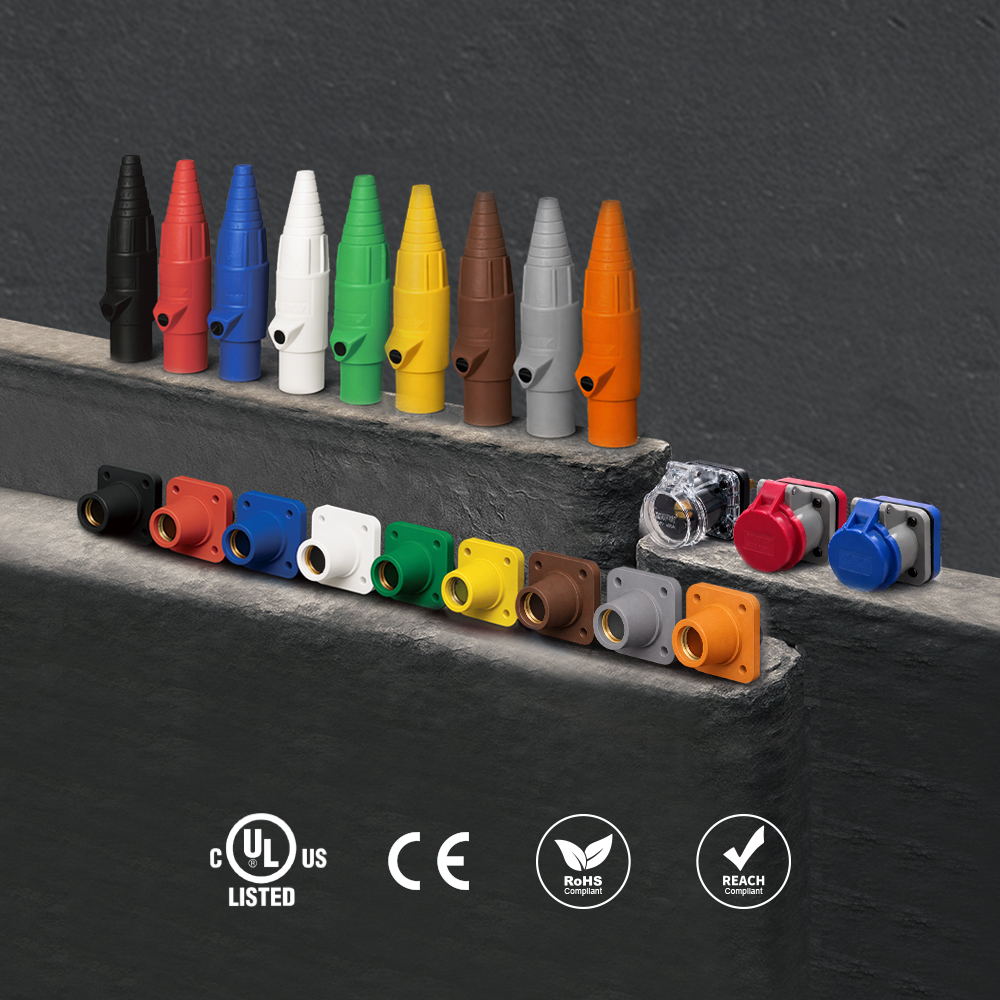 K-LOK 400A Single-Pole Cam-Type Connectors
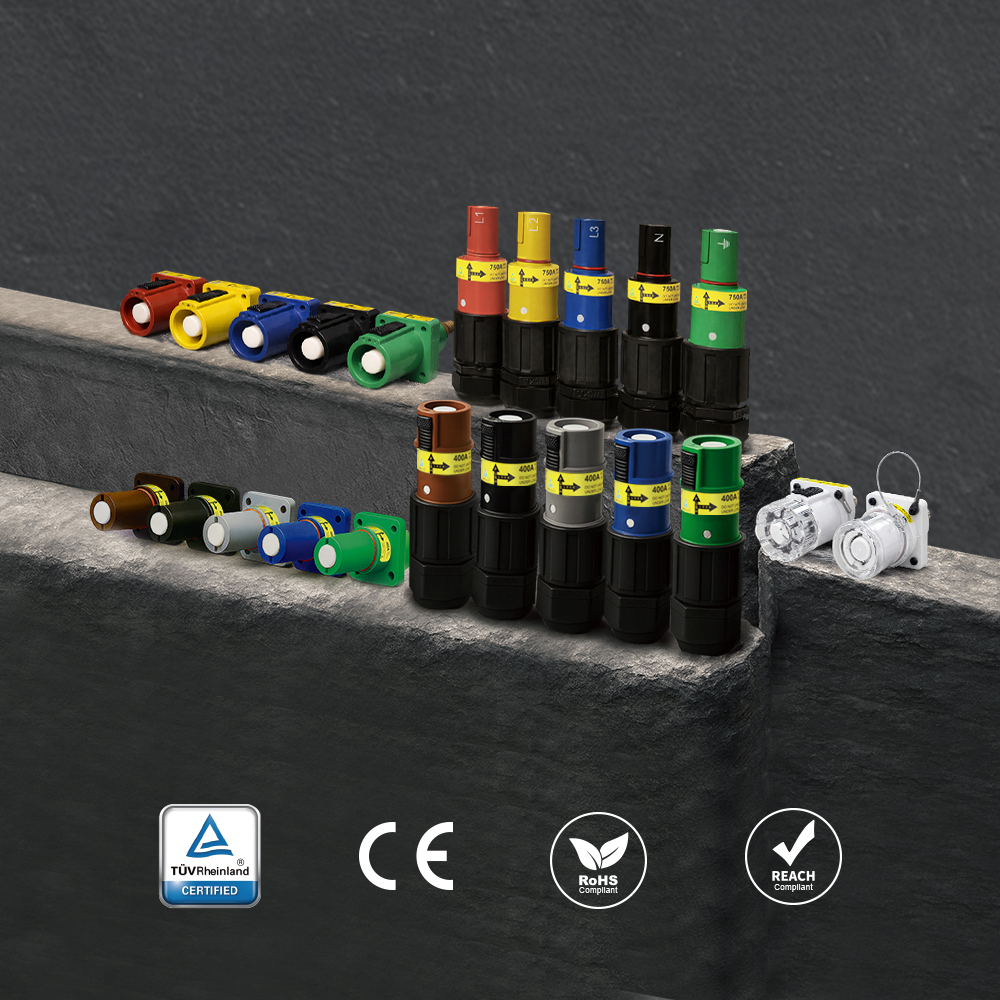 PowerFit 400A Keyed Single-Pole Connectors
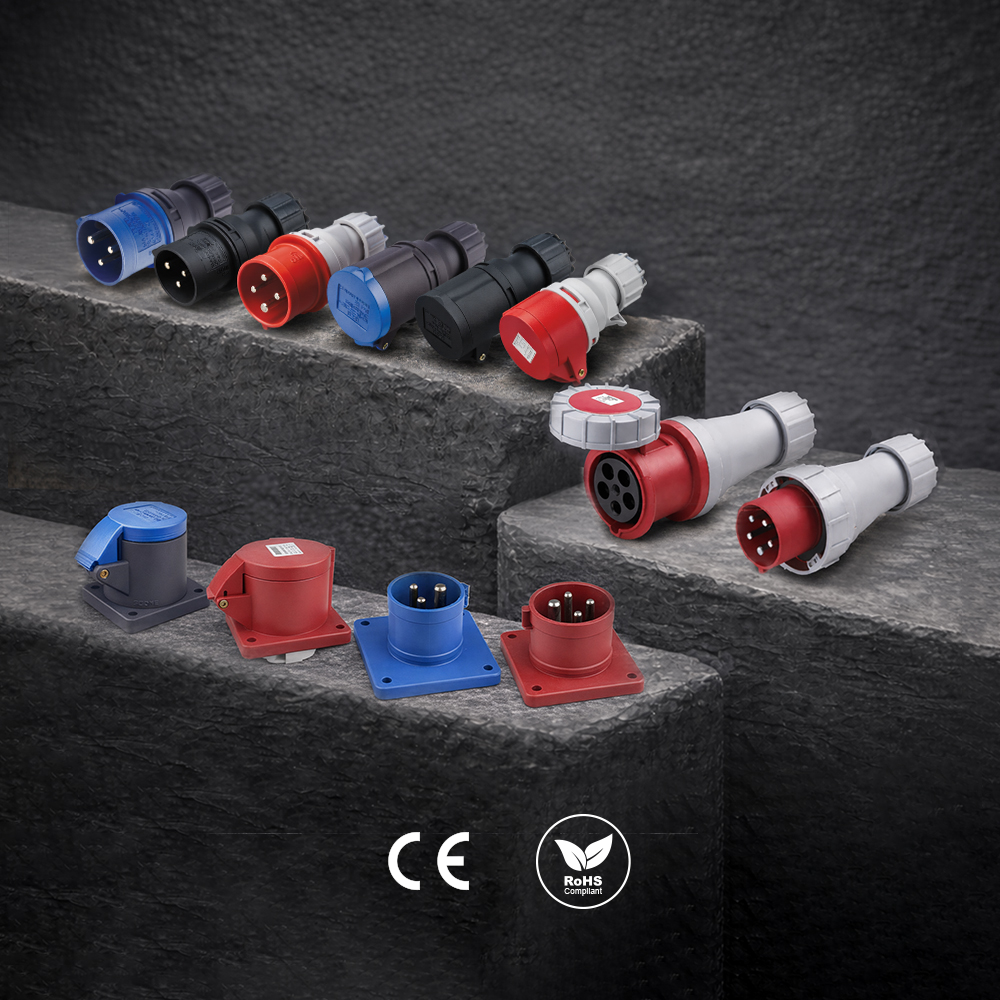 CEE Form Connectors
Have a Question?
Explore the full KUPO Power 101 FAQ Hub for answers to 30 more common questions about industrial power, or ask our team directly about your application.
