Are NEMA, CEE, and IEC connectors interchangeable with adapters - and when is adapting actually unsafe?
Are NEMA, CEE, and IEC connectors interchangeable with adapters - and when is adapting actually unsafe?
NEMA, CEE form, and IEC 60309 connectors are designed for different standards and are not directly interchangeable. Adapters can bridge them physically, but adapting becomes unsafe when it bypasses correct voltage, current, grounding, or protective characteristics. Any adaptation should be evaluated against the actual ratings and protective design of both sides.
Why different connector families exist and what their design differences mean
NEMA connectors (National Electrical Manufacturers Association) are North American connectors used primarily for residential, commercial, and light industrial power distribution in the United States and Canada. NEMA plugs and receptacles are designed around specific voltage and current combinations - a NEMA 5-15R is a standard 15-amp household outlet; a NEMA L14-30P is a three-phase 30-amp industrial plug. Each NEMA connector type is mechanically unique, with different blade configurations and pin arrangements, so that a 15-amp plug cannot physically fit into a 30-amp receptacle. This mechanical distinctiveness is a safety feature - it prevents someone from accidentally connecting a low-current device to a high-current circuit.
CEE Form connectors (pin-and-sleeve industrial connectors following IEC 60309) are multi-conductor assemblies designed for international industrial use, particularly in Europe and regions that adopt IEC 60309. A CEE Form connector carries all conductors - phases, neutral, and earth - in a single mating action, and the pin configurations and color coding are standardized worldwide to prevent mismating between incompatible voltage and frequency combinations. The earth pin is designed to make contact first and break last, ensuring protective grounding is always engaged or disengaged in the proper sequence.
IEC 60309 refers to the broader international standard that governs pin-and-sleeve connectors, which includes CEE Form but also encompasses other industrial connector families used in Australia, parts of Asia, and other regions. These connector families share the principle of standardized, keyed designs that prevent unsafe mating, but they operate under different electrical codes, frequencies, and voltage standards depending on the region.
What happens when you use an adapter to force incompatible connectors together
An adapter is a mechanical bridge that allows a plug from one family to mate with a receptacle from another family. For example, a NEMA L14-30P plug (three-phase 30-amp industrial, North American) could theoretically be adapted to mate with a 16-amp CEE Form socket designed for 400V, 50Hz European service. The adapter might be mechanically successful - the plug would physically insert into the receptacle - but the electrical consequences would be unsafe. The NEMA plug is designed to carry 30 amps at North American voltage and frequency standards (typically 480V, 60Hz). The CEE Form socket is designed to connect circuits no larger than 16 amps at 400V, 50Hz. If current flows through the adapter connection, the contacts inside the CEE Form socket would overheat and potentially weld, fail, or catch fire because they are undersized for the current being drawn.
Additionally, adapters can defeat the grounding and protective sequencing that connector designs are meant to provide. CEE Form connectors are engineered so that the earth pin engages first, ensuring the circuit is grounded before live voltage is present. If an adapter bypasses this sequencing - for example, allowing a NEMA plug to connect a CEE Form socket in the wrong order - a user could theoretically receive a shock from live voltage before the ground is established. The rating and protective architecture of each connector family exists for a reason; adapters that circumvent these protections introduce hazards that may not be immediately obvious to someone on a job site.
When adaptation is sometimes acceptable and when it is clearly unsafe
An adaptation from higher-current to lower-current can sometimes be acceptable if the protective device upstream is properly rated to limit the circuit. However, adaptation from lower-rated to higher-rated connector families is unsafe because the lower-current protective device may not trip quickly enough to protect higher-rated infrastructure. Crossing between families with different voltage or frequency ratings - adapting 120V to 400V, or 60Hz to 50Hz - is categorically unsafe without transformers, frequency converters, and engineering analysis. The safest approach is to avoid adapters entirely by selecting the correct connector family from the outset.
Where KUPO Power's connector families reduce the need for risky adapters
KUPO Power manufactures a comprehensive range of connectors across all three major families - K-LOK 400A and K-LOK 150A single-pole cam-type connectors (Camlok standard for North America), PowerFit 400A keyed single-pole connectors (KSPC, Powersafe standard for Europe), and CEE Form connectors (IEC 60309 for international industrial use). By sourcing KUPO Power connectors appropriate to the region and circuit design from the outset, productions and installations avoid the need for adapters in the first place. A touring show designed for North American venues uses K-LOK and NEMA infrastructure throughout; a show designed for European deployment uses PowerFit and CEE Form from the source generator to the load. If a production must truly operate across regions, the connector strategy should involve proper transformers, frequency converters, and appropriately-rated connectors on both sides, not adapters that compromise safety. KUPO Power works with integrators and rental companies to help design systems that stay within a single connector family, eliminating the temptation to improvise with adapters. The KUPO Power 101 FAQ Hub covers connector selection and system design to help you choose the right family for your market and avoid the pitfalls of forced adaptations.
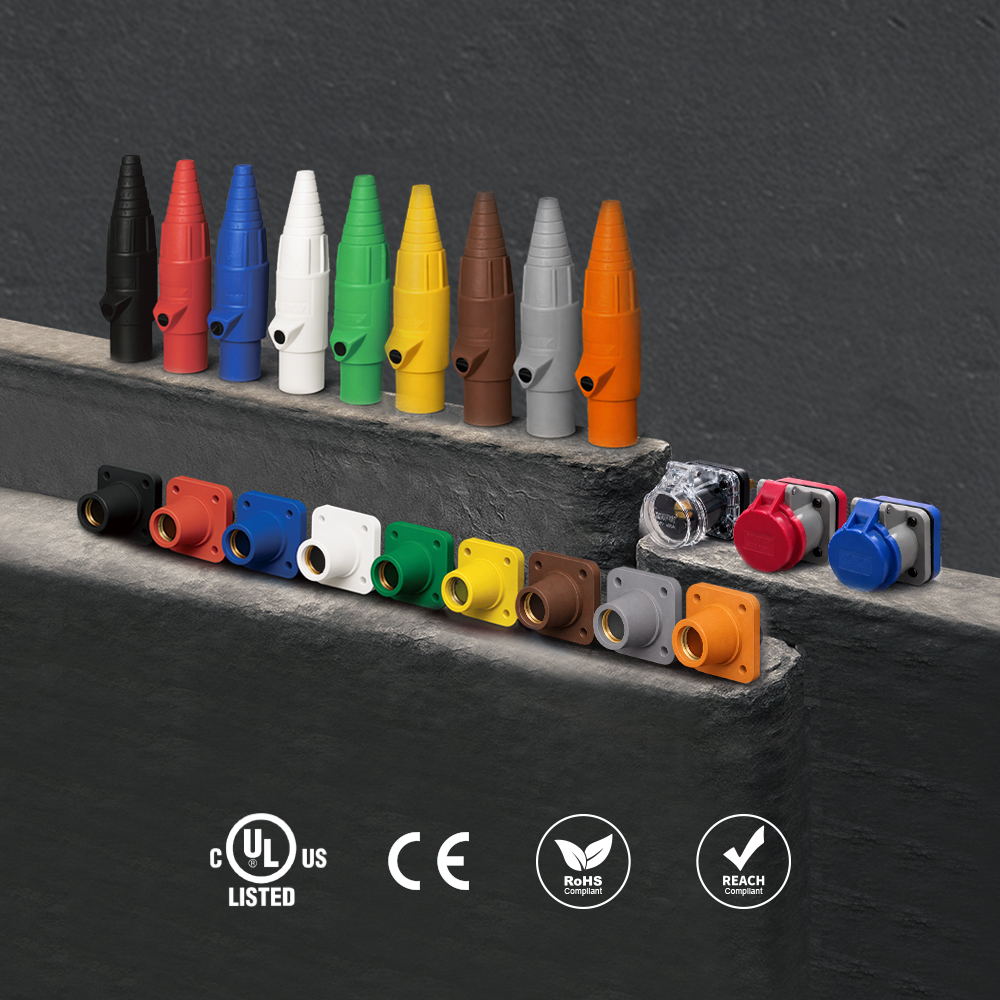 K-LOK 400A Single-Pole Cam-Type Connectors
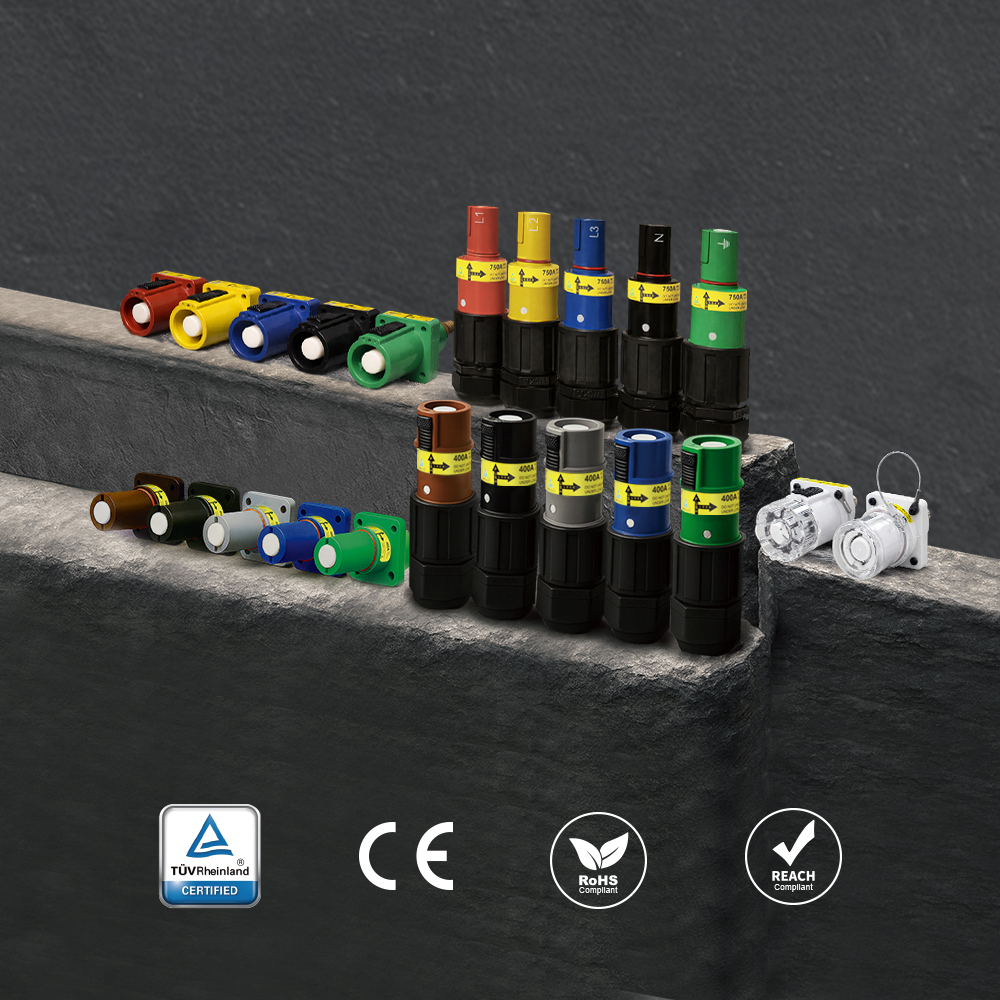 PowerFit 400A Keyed Single-Pole Connectors
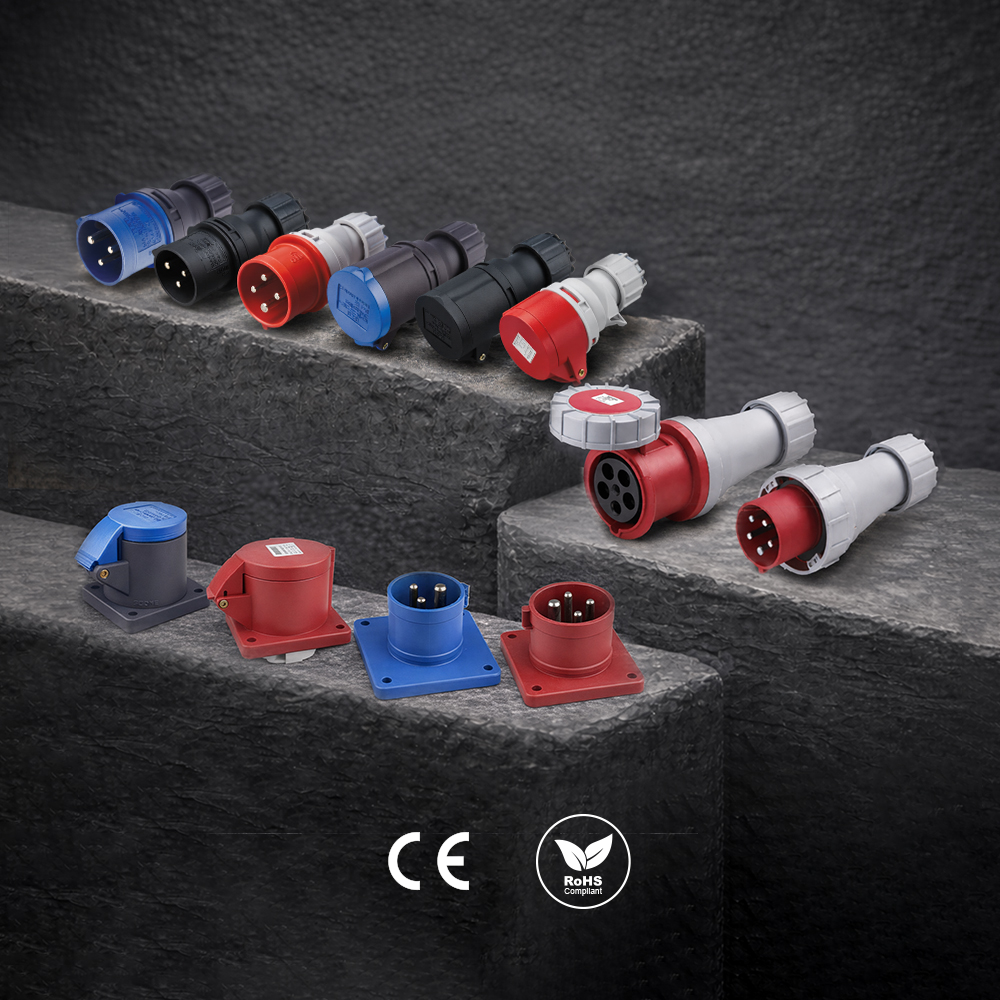 CEE Form Connectors
Have a Question?
Explore the full KUPO Power 101 FAQ Hub for answers to 30 more common questions about industrial power, or ask our team directly about your application.
