Do circuit breakers protect people from electric shock?
Do circuit breakers protect people from electric shock?
Not by themselves in most situations. A standard circuit breaker protects conductors and equipment from overcurrent, but the current thresholds that can injure or kill a person are far below a breaker's trip point. Shock protection depends on the overall system design - grounding, bonding, and in many cases a separate class of protective device designed specifically for personnel safety.
Why a 20-amp breaker cannot save someone from a shock that only takes a fraction of an amp
The gap between what hurts a person and what trips a breaker is enormous. A current as low as 10 to 30 milliamps (thousandths of an amp) through the human body can cause involuntary muscle contraction, inability to let go, and potentially lethal cardiac disruption. A standard 20-amp breaker is designed to trip when the current flowing through the circuit exceeds 20 amps - roughly a thousand times more than the lethal threshold. Even if a person contacts an energized conductor and current flows through their body to ground, the total fault current through the breaker may not be high enough to trip it at all, depending on the impedance of the fault path.
This is not a flaw in the breaker. The breaker's job is to protect the conductor and the equipment from damage caused by overcurrent. It was never designed to sense the small leakage currents that characterize a shock event. Expecting a standard breaker to provide personnel shock protection is a misunderstanding of what the device was built to do.
What actually provides shock protection - and how it differs from overcurrent protection
Personnel shock protection in most modern electrical systems comes from a combination of design layers working together. The first layer is equipment grounding and bonding. When all exposed metal parts of enclosures, frames, and connectors are bonded together and connected back to the system ground, a fault that energizes a metal surface will create a low-impedance path to ground. That low-impedance path draws enough current to trip the overcurrent device quickly, clearing the fault before sustained contact becomes dangerous. Grounding does not prevent the fault, but it limits how long the fault can persist.
The second layer, used in many applications, is a ground-fault circuit interrupter (GFCI, also called an RCD or residual current device in other parts of the world). A GFCI monitors the current flowing out on the hot conductor and returning on the neutral. If there is a difference - meaning current is leaking through an unintended path, such as through a person to ground - the device trips in milliseconds at a threshold of around 5 to 6 milliamps in personnel-protection applications. That threshold is low enough to interrupt the circuit before the leakage current reaches a level that causes serious harm.
Neither of these layers works alone. Without good grounding, a ground fault may not draw enough current to trip anything. Without the right protective device, even a well-grounded system may not clear a low-level leakage fault fast enough. The system design has to account for both.
What this means for field setups where shock protection is harder to guarantee
In permanent building installations, shock protection layers are built into the design from the start - grounding electrodes, bonded panels, GFCI-protected circuits in wet locations. In temporary field setups - touring rigs, film sets, outdoor events - those layers are often assembled from portable equipment under time pressure, and the quality of the protection depends entirely on how carefully the system is built each time. A distribution box may have properly rated breakers on every output but no GFCI protection on the circuits feeding areas where personnel are working in wet or conductive conditions. A feeder run may have connectors that are properly rated for current but mounted on frames that are not bonded back to the system ground.
The practical takeaway for anyone building or inspecting a temporary power system is to check the full protection stack, not just the breakers. Are the enclosures bonded? Is the grounding conductor continuous from the source through every connector in the path? Are GFCI devices present where the local code or the risk assessment calls for them? A breaker in the panel means the wire is protected. It does not mean the crew is protected.
Where KUPO Power's connectors contribute to the shock protection chain
The grounding conductor in every feeder and branch circuit runs through the connectors at each connection point - and that connector layer is what KUPO Power builds. K-LOK 400A and K-LOK 150A single-pole cam-type connectors carry the dedicated ground conductor as part of every multi-cable feeder set, maintaining the grounding path from source to load. PowerFit 400A keyed single-pole connectors (KSPC) serve the same role in the Powersafe ecosystem used in European stage and event work. CEE Form connectors carry the protective earth pin as an integral part of the IEC 60309 standard. A grounding path is only as reliable as its weakest connection, so every connector in the chain matters. For a deeper look at how grounding, bonding, and protection work together as one system, the KUPO Power 101 FAQ Hub walks through it step by step.
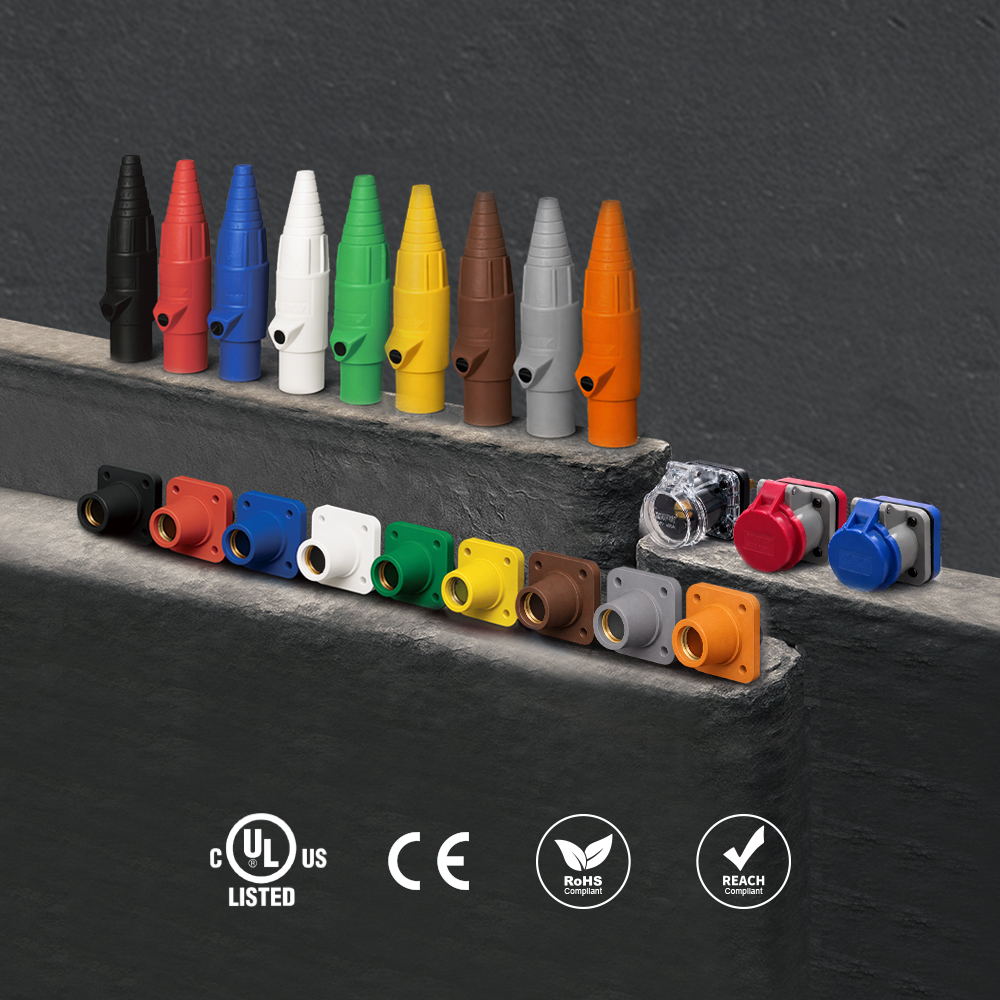 K-LOK 400A Single-Pole Cam-Type Connectors
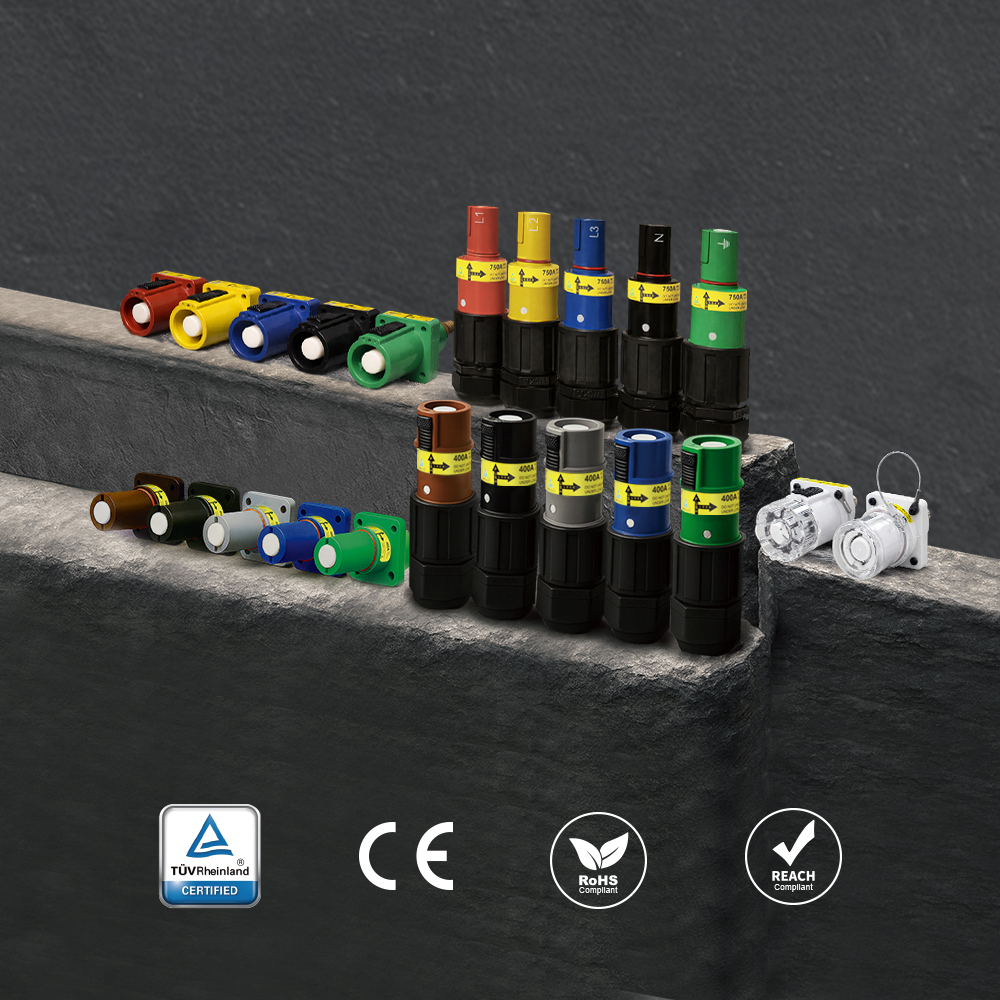 PowerFit 400A Keyed Single-Pole Connectors
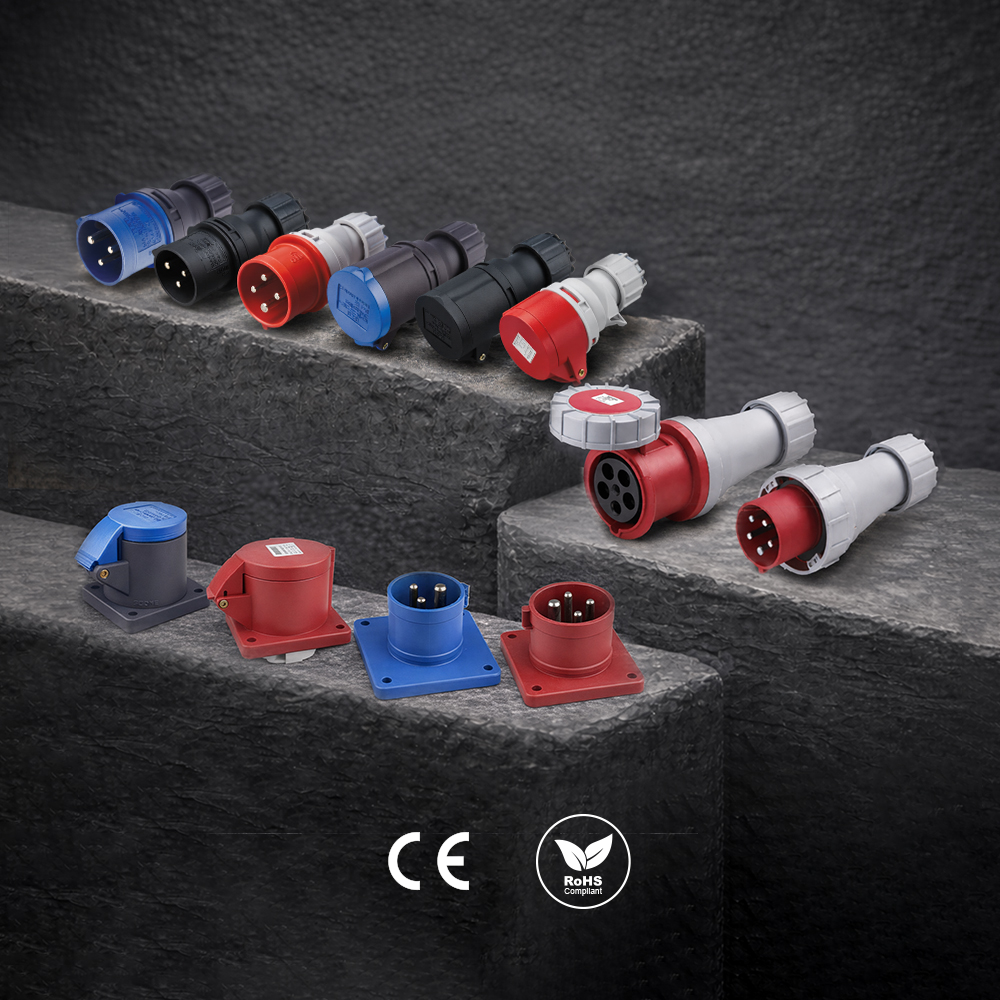 CEE Form Connectors
Have a Question?
Explore the full KUPO Power 101 FAQ Hub for answers to 30 more common questions about industrial power, or ask our team directly about your application.
