Why do cables need to be derated in real installations?
Why do cables need to be derated in real installations?
Cable ampacity ratings are published under standardized reference conditions - a specific ambient temperature, a specific installation method, and a defined number of conductors. Real installations rarely match those assumptions exactly, so the published rating has to be adjusted downward to reflect the actual thermal environment. That adjustment is called derating, and skipping it means treating a catalog number as a field-safe number when it is not.
The three conditions that most often force a cable below its published rating
The first and most common derating factor is ambient temperature. Standard ampacity tables in the NEC (National Electrical Code) are typically based on a 30 degree Celsius ambient. IEC tables use a similar reference. When the surrounding air or surface temperature is higher - outdoors in summer, near heat-producing equipment, on a rooftop, inside a sun-exposed tent structure - the cable starts closer to its insulation temperature limit before it carries any current at all. The correction factor reduces the allowable current to keep the total temperature within bounds. A cable rated for 100 amps at 30 degrees ambient might only be good for 80 or 85 amps at 40 degrees ambient, depending on the insulation type.
The second factor is conductor bundling. When multiple current-carrying cables are run together in a bundle, conduit, or cable tray, each cable's heat has to dissipate through or past the others. The mutual heating effect reduces the ability of each cable to shed its own heat, so the allowable current per cable drops. The more cables in the bundle, the larger the derating. Six cables bundled together might each need to be derated to 80% of their individual free-air rating. This shows up constantly on temporary installations where feeder cables are lashed together on cable bridges or run through the same trunk.
The third factor is installation method itself. A cable lying directly on a surface dissipates heat differently than one suspended in free air. A cable in a sealed conduit retains more heat than one in an open tray. A cable coiled on a drum and never fully unwound traps its own heat in the center of the coil. Each of these conditions changes the thermal path from the conductor to the surrounding air, and each one may require a derating adjustment.
How derating factors stack - and why the math matters more than intuition
When more than one derating condition applies, the factors multiply rather than simply being picked from whichever is worst. If the ambient temperature correction factor is 0.87 and the bundling adjustment factor is 0.80, the combined derating is 0.87 multiplied by 0.80, which equals 0.696. A cable with a published ampacity of 100 amps under reference conditions is now good for roughly 70 amps under the actual installation conditions. That is a 30% reduction from the catalog number, and it comes from two conditions that individually seemed modest.
The stacking effect is where most derating mistakes happen. A crew member who knows the cable is "rated for 100 amps" may not realize that the combination of a warm outdoor stage and a bundled cable run has quietly dropped the safe capacity to 70 amps. The cable still looks the same. The label still says the same thing. But the thermal headroom has been consumed by conditions the label was never designed to account for.
What to check on a job site before trusting a cable's published ampacity
The first question is straightforward: what is the ambient temperature where this cable will be running? If it is above the reference temperature in the ampacity table you are using (30 degrees Celsius for NEC, check the specific table for IEC), apply the temperature correction factor from the code before trusting the published rating. The second question is how many other current-carrying cables are running alongside this one. If the cable is part of a bundle, tray fill, or cable bridge with other energized conductors, apply the bundling adjustment factor. The third question is whether the cable is fully deployed. A cable that is partially coiled on its reel, or bundled tightly with zip ties instead of spread out, retains more heat than a cable that is laid out in free air.
In temporary installations, these three checks should be part of every power plan, not an afterthought. The labor cost of pulling one size larger cable or separating bundled runs is almost nothing compared to the cost of a cable failure during a show, a shoot, or a broadcast. Derating is not conservative engineering. It is accurate engineering - it gives you the real number instead of the wishful one.
Where KUPO Power's connectors fit into the derating conversation
Every connector at the end of a derated cable run has to be rated for at least the derated current - and in practice, the connector's own thermal performance adds to the thermal budget of the termination. That connector layer is what KUPO Power builds. K-LOK 400A and K-LOK 150A single-pole cam-type connectors are KUPO's equivalents to the Camlok ecosystem used in North American touring, film, and live event work, where long feeder runs in bundled configurations make derating a daily concern. PowerFit 400A is the Powersafe-pattern keyed single-pole connector (KSPC) standard in European stage and event power. CEE Form connectors cover the IEC 60309 international pin-and-sleeve standard. When a cable has been derated for real conditions, the connector at each end still needs to match the actual thermal load - not just the catalog number on the cable jacket. The KUPO Power 101 FAQ Hub covers the full coordination picture.
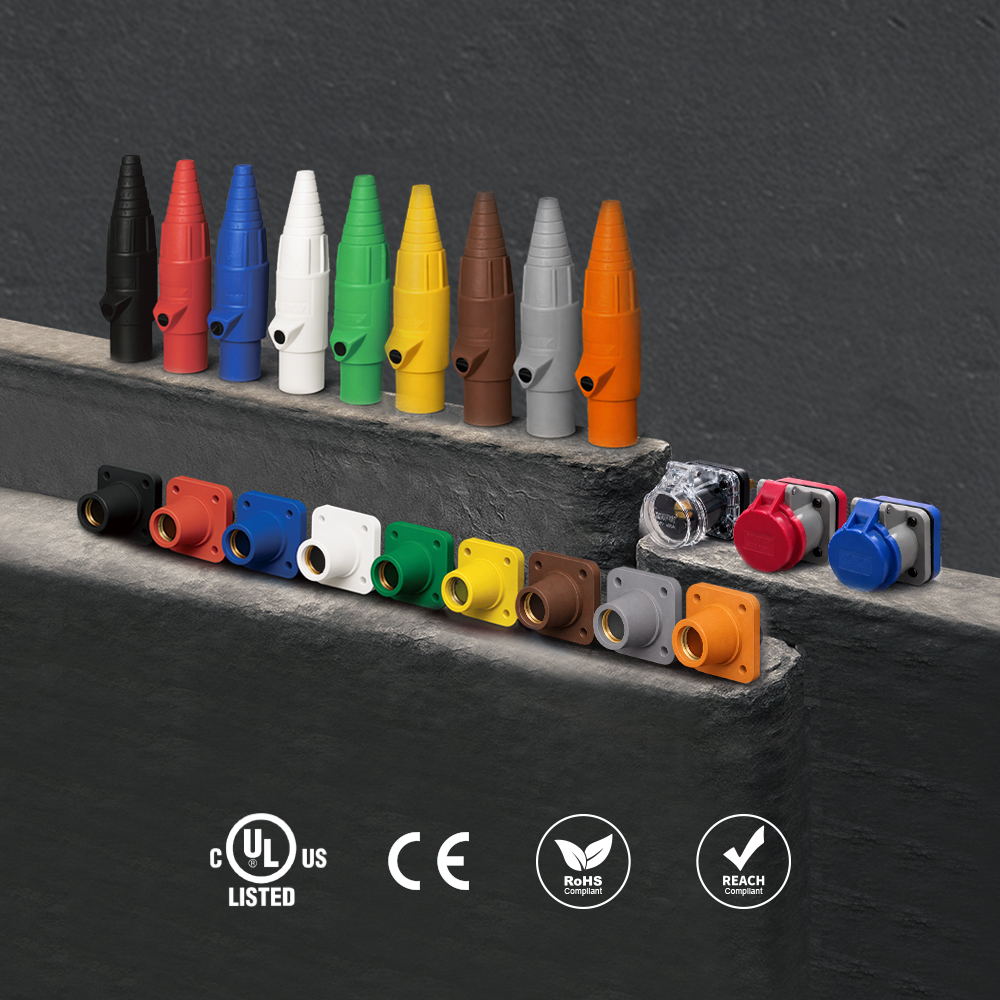 K-LOK 400A Single-Pole Cam-Type Connectors
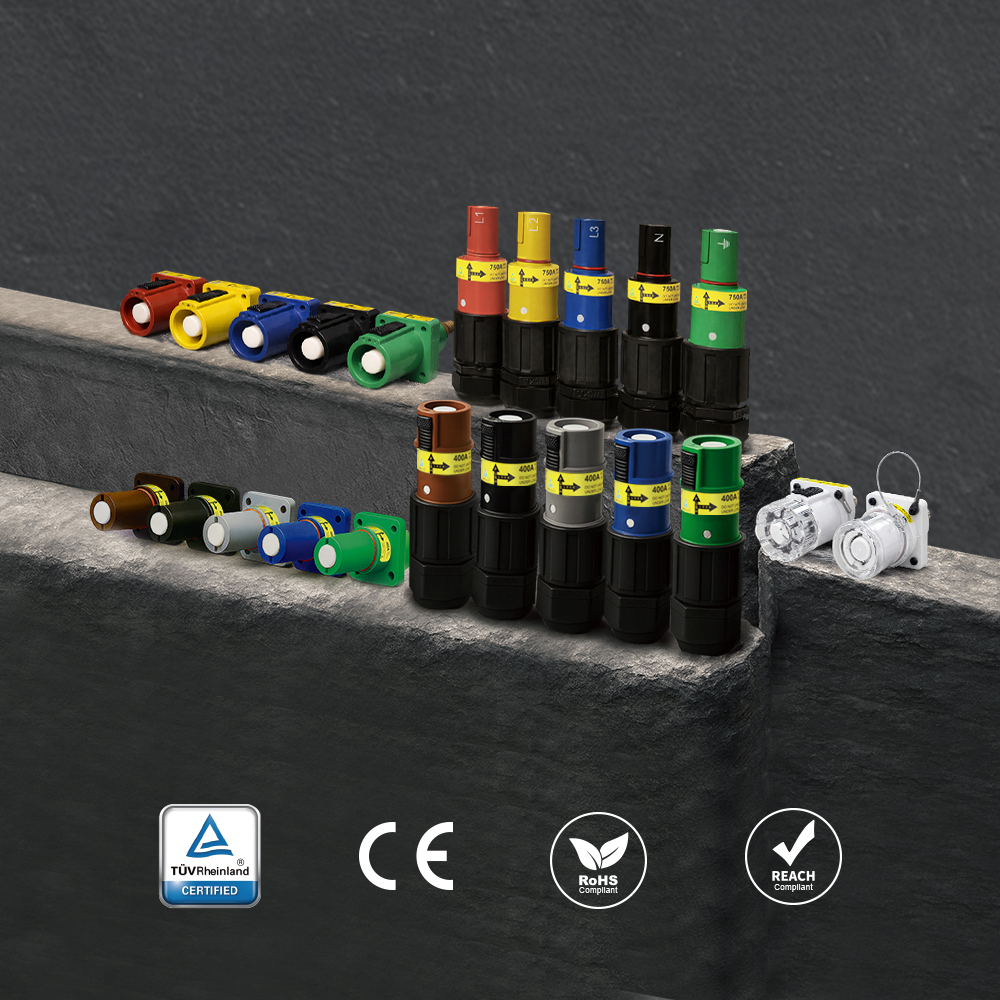 PowerFit 400A Keyed Single-Pole Connectors
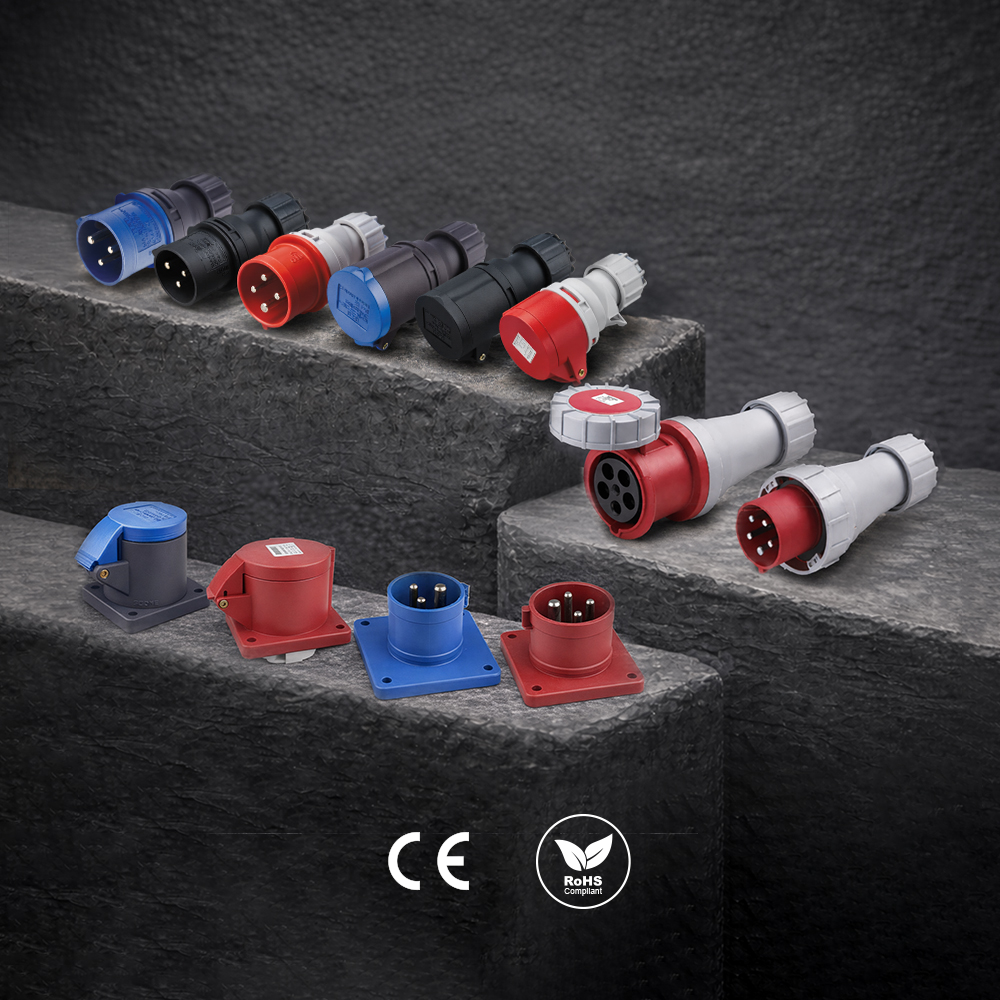 CEE Form Connectors
Have a Question?
Explore the full KUPO Power 101 FAQ Hub for answers to 30 more common questions about industrial power, or ask our team directly about your application.
